

Singapore doesn't really do "dry" — but it does dry-er. The brief stretch in late April and early May, just before the Southwest Monsoon settles in, is about as kind as the air gets. By the time the rains arrive in earnest, every room in your home is contending with humidity that often climbs above 85 per cent for days at a stretch.
That's the climate mould has been waiting for.
If your home has ever taken on a faintly musty smell during the wet season — or you've found a strange grey bloom on the back of a wardrobe, the rim of a shower screen, or the corner where the wall meets the ceiling — you've met the local mould problem already. The good news is that mould is much easier to prevent than it is to remove, and the next few weeks are the right window to get ahead of it.
Mould needs three things to thrive: warmth, moisture, and a still pocket of air to settle in. A typical HDB flat or condo, especially one running an aircon for hours each day, hands it all three on a tray.
Heat from the corridor, condensation around aircon vents, the steady drip of rainy-day humidity through window seals, and furniture pushed flush against external walls all create the kind of micro-environments mould adores. Once it takes hold, it sheds spores into the air, which is when allergies, sinus problems, and that lingering "old shoebox" smell start showing up.
The trick to staying ahead of mould is to take the home back to a clean baseline before the wet weeks begin. A weekend or two now saves a lot of scrubbing in July.
Start with the spots most likely to harbour the first traces:
A soft brush, a paste of bicarbonate of soda, and a little white vinegar will handle most surface-level mould on tile and silicone. For wood, leather, and fabric, stop at a damp microfibre cloth — anything wetter risks driving the moisture deeper.

Leather shoes that haven't been worn in weeks are often the first thing to bloom during a humid stretch. A small fabric pouch of silica gel or a tin of activated charcoal in the cupboard quietly absorbs the moisture they sit in.
Air can't circulate where furniture meets the wall, so condensation builds up unseen. Pulling the sofa or bed about ten centimetres away from external walls lets the area breathe and dry.
Front-loading machines in particular hold a film of damp on the rubber gasket. After the final cycle of the day, leave the door slightly open to let it air out, and run an empty hot wash with a cup of white vinegar once a fortnight.
Even with a working extractor fan, hot showers leave moisture clinging to the ceiling — and it tends to pool in the corners. A quick wipe with a long-handled microfibre mop after a shower goes a long way.
If your unit smells stale when it switches on, the drainage tray and cooling fins are likely starting to grow biofilm. A regular service every three months, with a chemical wash once a year, keeps the smell — and the mould source — out of the air you breathe.
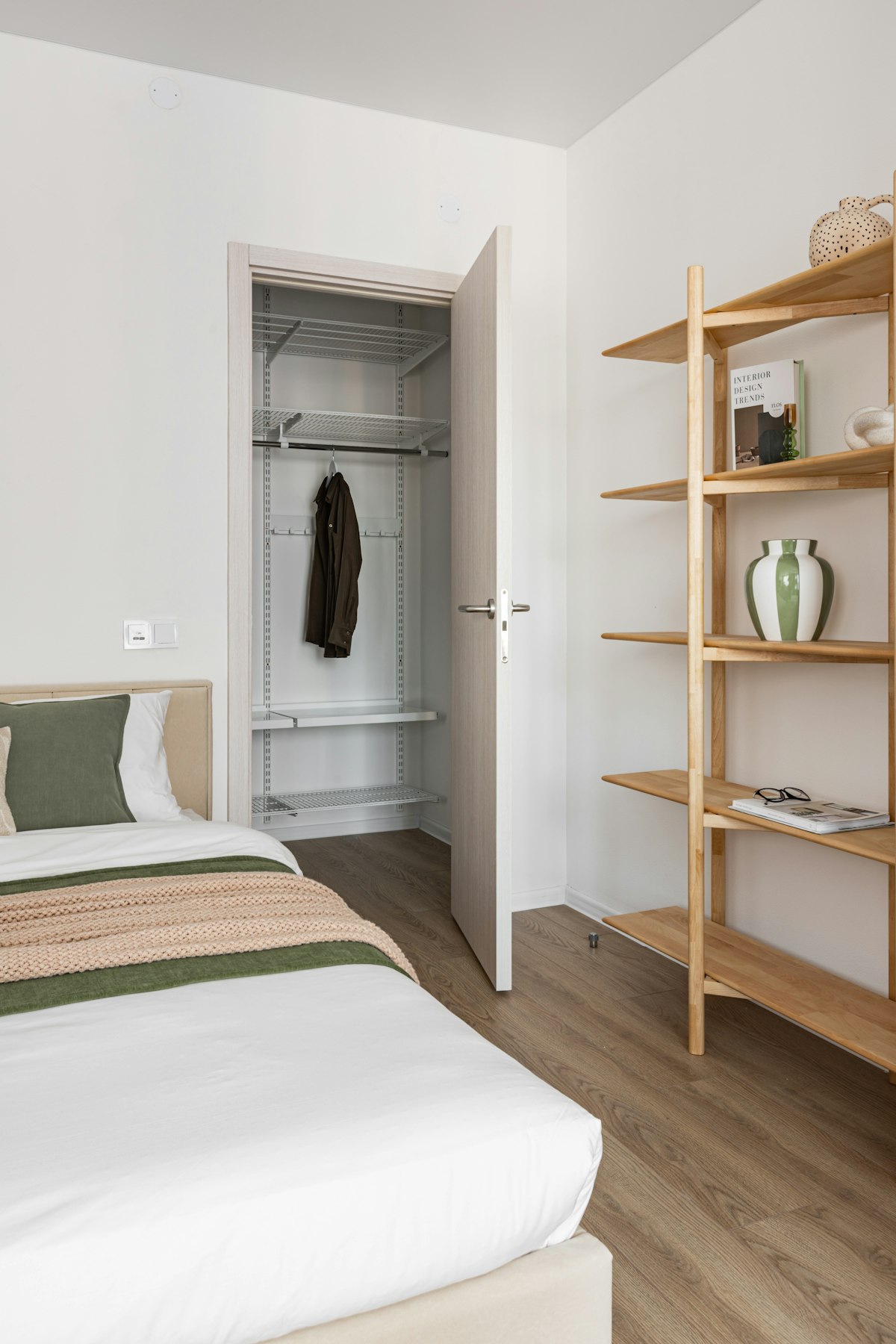
Most mould prevention isn't about heroic effort. It's about small, repeatable choices.
Keep the air moving. On dry afternoons, open at least two windows on opposite sides of the flat for fifteen minutes — cross-ventilation drives out trapped humidity better than any single open window. On wet days, run a fan in still rooms instead.
Dry shower walls after use. A simple silicone squeegee on the glass screen and tiled walls cuts the standing water that mould most relies on. Two minutes after each shower is enough.
Watch the laundry. Hanging wet clothes inside an enclosed room without ventilation is one of the quietest causes of bedroom mould. If indoor drying is unavoidable, run a dehumidifier or position a fan at low speed near the drying rack.
Surface mould — small, soft, easily wiped — is something most homes can manage themselves. Anything that comes back within a fortnight, has spread along grout, or has darkened the silicone or wood it's growing on usually needs a deeper treatment than household products can provide.
Persistent musty smells, recurrent allergies, and visible discolouration on ceilings or walls are the clearer signs that the mould has moved past the surface. At that stage, a professional mould treatment paired with a thorough deep clean is what stops it from settling in for the season.
The Southwest Monsoon is part of the Singapore year, and it's not going anywhere. But your home doesn't have to spend the next five months smelling of damp, or losing favourite shoes to grey blooms in the back of the cupboard.
If your home is overdue for a proper reset before the rains, Nimbus Homes offers mould removal, deep cleaning, and aircon servicing across Singapore — the three things most worth booking before the wet weeks settle in. Visit nimbushomes.com to learn more or book a session.


.png)


