
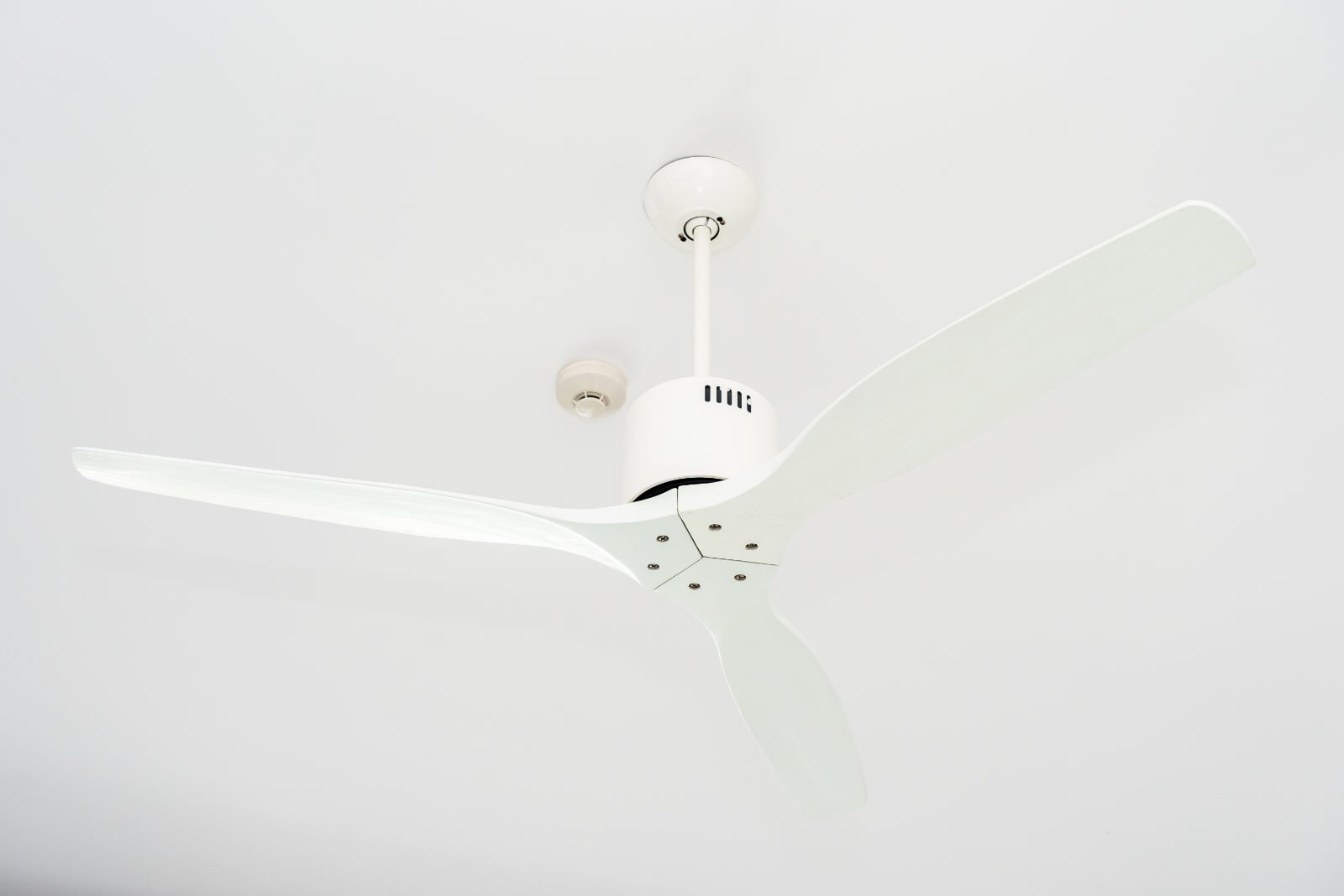
A ceiling fan is the one thing in a Singapore flat that never really switches off. It runs through the afternoon, it runs through the night, and it runs for months at a stretch without anybody looking directly at it. You look up at a ceiling fan roughly once a year, and usually only because something has started going wrong.
The odd part is that a spinning fan is a dust magnet, not a dust shifter. Air moves across the blade, the dust riding in that air meets the surface, and it stays there. So the fan turns, the room feels cooler, and three metres above your head a grey felt quietly builds. Here are four things a neglected fan does, and what each one is actually telling you.
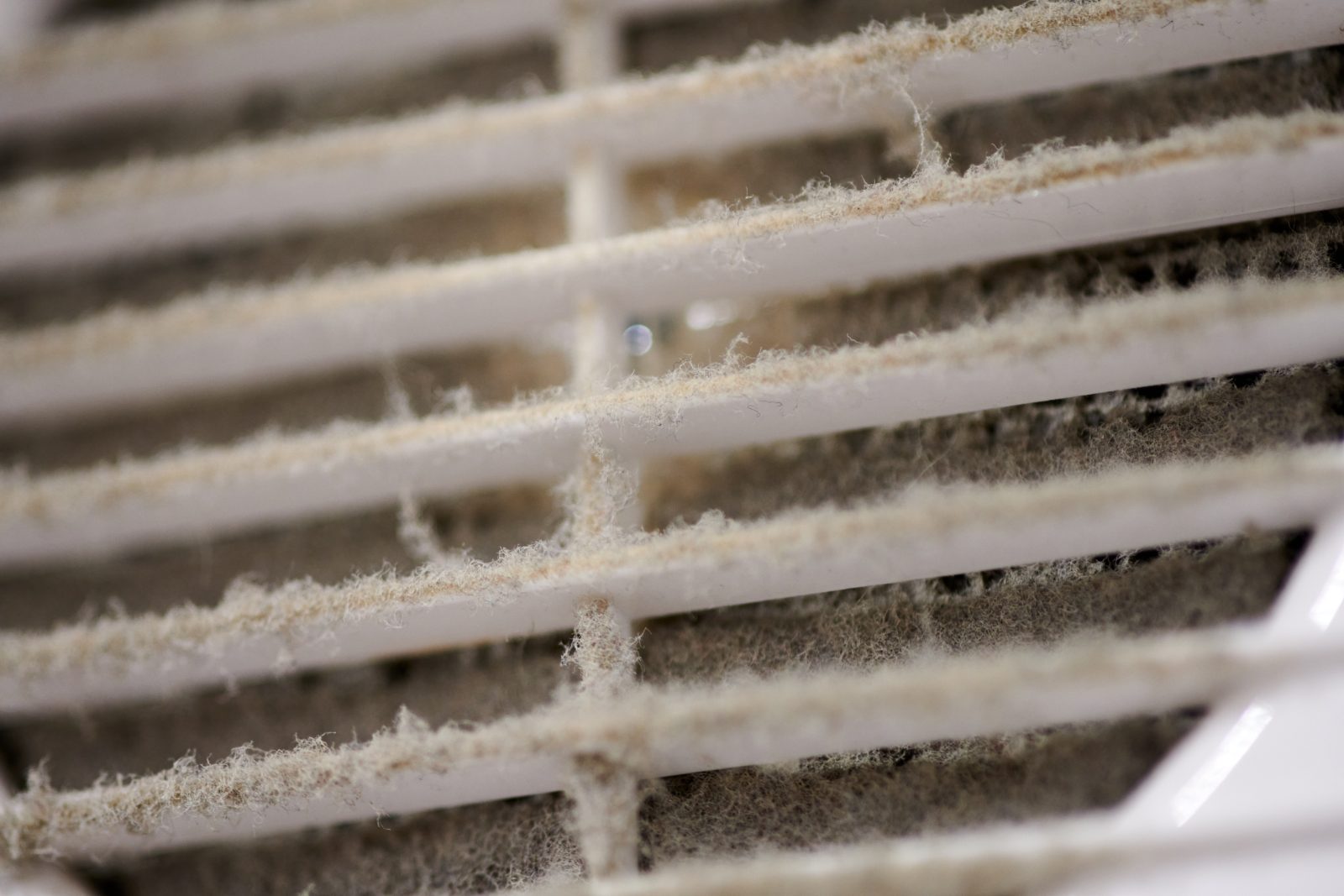
Switch it off, wait for it to stop properly, and look at the front edge of each blade — the edge that meets the air. That is where the fringe grows: a soft grey lip, sometimes a centimetre deep, made of skin flakes, fabric fibres, cooking vapour and whatever drifted in from the corridor.
Humidity makes it worse. Damp dust clings rather than drifts, which is why fans here fur up faster than fans in dry climates, and why a dry feather duster mostly just rearranges the problem. A slightly damp microfibre cloth, folded over the blade and drawn along its length, is the thing that actually lifts it off in one pass.
A fan that has run true for years and suddenly develops a wobble has usually not broken. It has become unbalanced. A heavier crust on one blade than on the others is enough to do it, and so is a blade screw that has worked itself loose over a few thousand hours of running.
Clean every blade, evenly, and tighten the screws at the hub. Most wobbles settle at that point. If one persists afterwards, stop using the fan and have it looked at properly — a wobble that survives a clean is not a cleaning problem.
Switch a fan on after a few days away and there is often a brief, warm, faintly dusty smell that you notice and then stop noticing. That is the motor housing gently heating the dust that has settled on and around it.
Harmless in itself, but it is a reliable signal. If the housing is holding that much, the aircon unit in the same room is almost certainly holding more — and that one you cannot reach with a cloth. It is sealed, it runs wet, and getting inside it is the point of Aircon Servicing.
A fan does not keep its dust. Every time you switch it on, some of what is sitting on the blades is flung outward and lands on the tops of wardrobes, the back of the sofa, the upper edges of doors and the skirting on the far side of the room.
That is why a room with a neglected fan feels dusty everywhere at once, and why wiping the furniture first is the wrong order — you will only end up doing it twice. Ceiling and fan first, then high surfaces, then the floor.

None of this needs a special trip to the shops. A step stool, an old pillowcase and a damp cloth will do it.
Twenty minutes tonight and the fan is yours again. What is worth handing over is the part the pillowcase cannot reach: the high ledges, cornices and tops of cupboards across the whole flat, which is exactly what a Deep Cleaning visit is for. And if the dust-everywhere feeling is a standing problem rather than a one-off, regular Housekeeping Services stop the high surfaces ever reaching this stage.
Look up this evening. Then book your next clean and let someone else handle the bits above eye level.


