
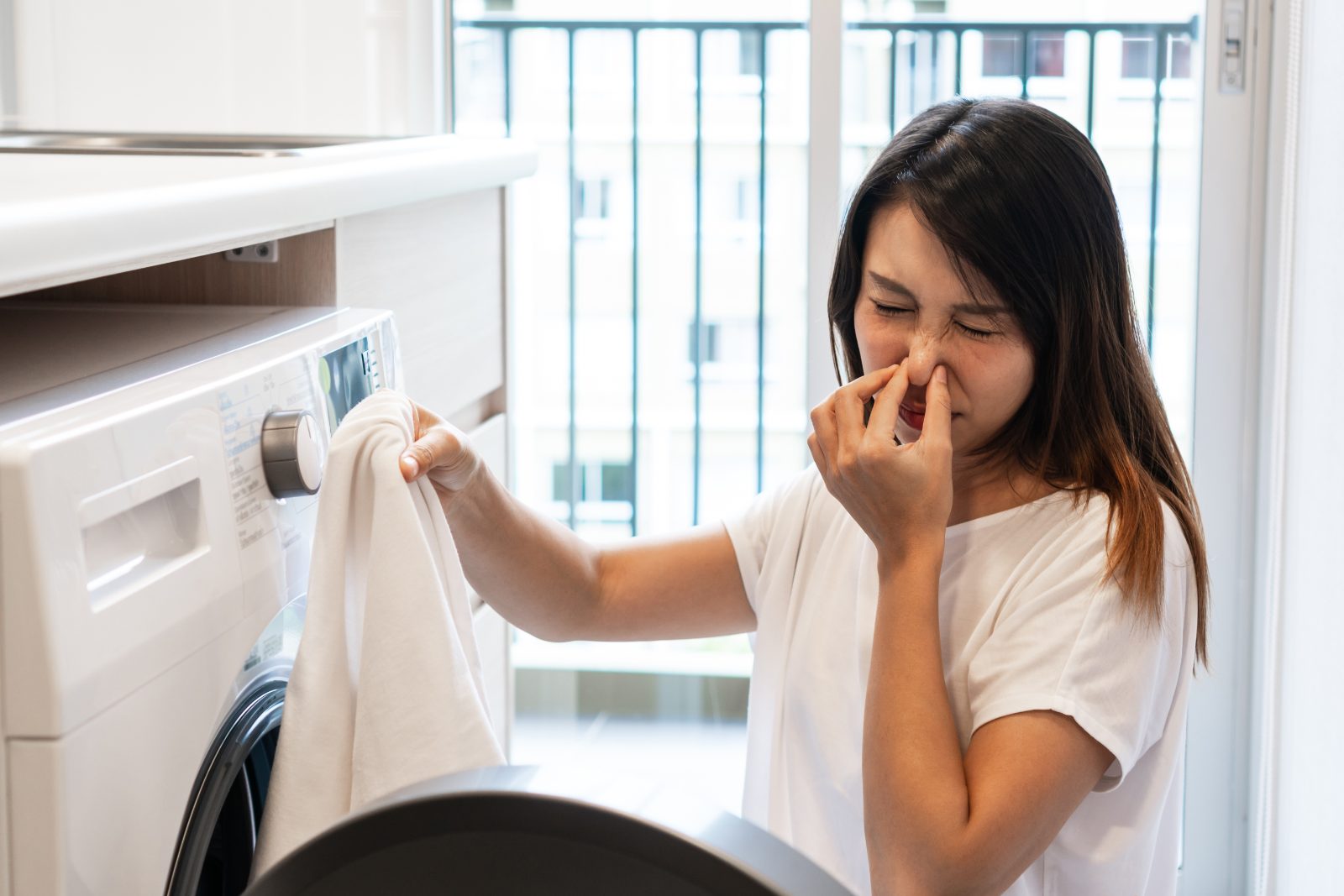
There is one appliance in your flat that spends its entire working life full of hot water and soap, and for that reason alone most of us have quietly decided it must be self-cleaning. It isn't. The washing machine is the only thing in the house we expect to come out clean by virtue of what it does for a living.
In a Singapore flat it also has a harder time than most. It usually lives in the service yard or a corner of the kitchen, behind a door, in air that sits still and rarely drops below twenty-eight degrees. So here are the questions people quietly wonder about theirs and almost never say out loud.
Yes, and the reason is less obvious than dirt. Detergent, fabric softener, body oils and lint combine into a soft residue that settles anywhere water lingers — the rubber door seal on a front-loader, the detergent drawer, and the outer drum you never see. Fabric softener is the worst offender of the lot. It is designed to coat fibres, and it coats everything else on its way past.
Short cold cycles, which is what nearly all of us run, never get warm enough to shift any of it. So the residue builds slowly and invisibly for years, in a warm damp compartment, which is an excellent description of somewhere you would not want your clothes to spend an hour.
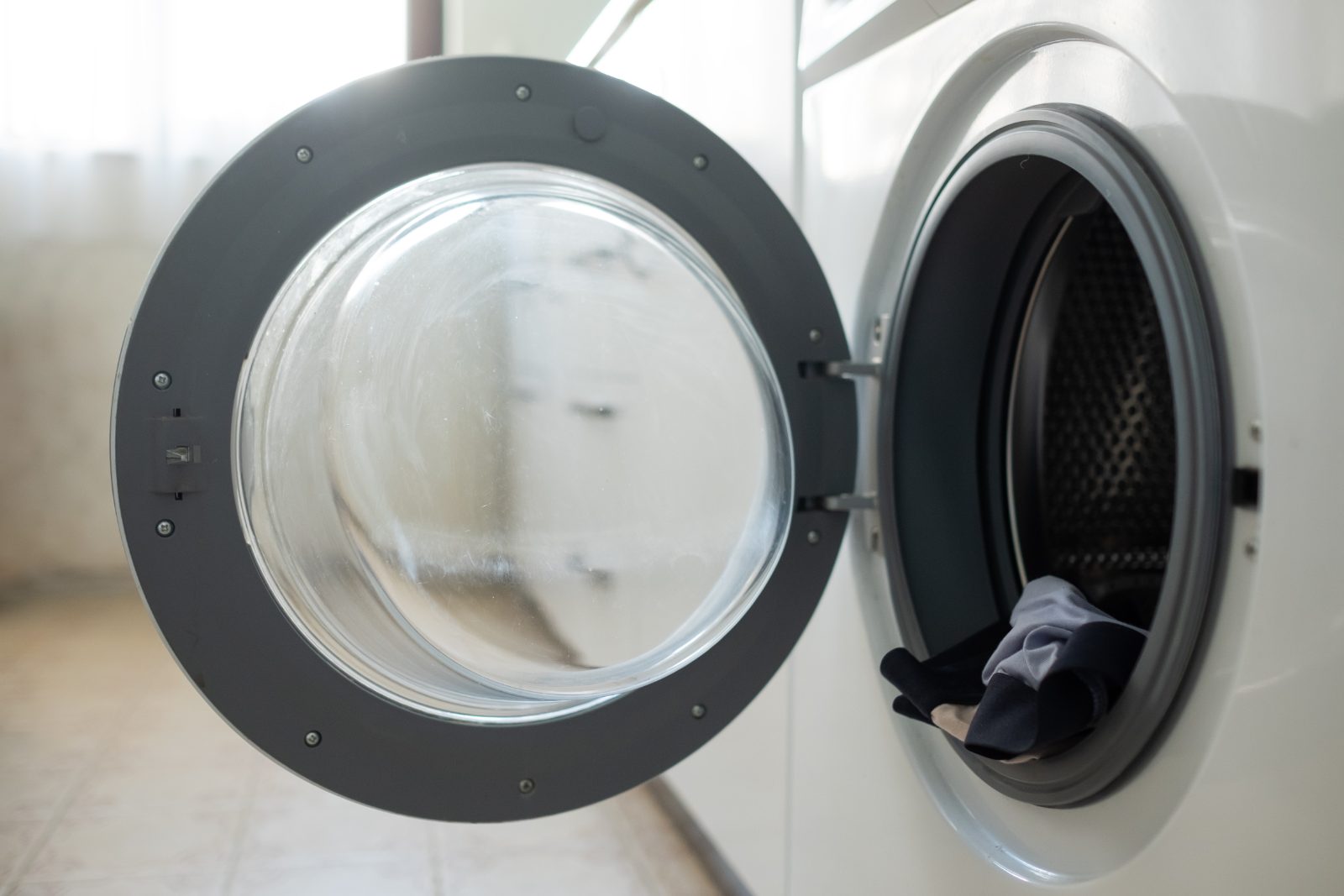
Because they are picking something up on the way out. That flat, faintly sour note on a shirt that has just been washed is residue transferring back onto fabric — it is not a sign that the detergent has failed. This is why buying a stronger detergent so rarely fixes it, and why the smell comes back within a week every time.
Our humidity makes it worse at both ends. A finished load left sitting in the drum for three hours is effectively in a warm sealed box, and a drum that never dries out between washes never gets the chance to reset.
Less than you would think, and most of it is waiting rather than scrubbing.
The monthly hot cycle does most of the work on its own. The rest is a five-minute job you can do while the kettle boils, and the difference shows up in the next load rather than in a month's time.
Sometimes it isn't. Pull the machine out once — most people never have — and look at what is behind it. A service yard corner holds damp in three places at once: the floor under and behind the machine, the grout, and the stretch of wall that no air ever crosses.
If you find black or grey speckling on that wall or creeping along the grout lines, that is not the machine's doing and no maintenance wash will touch it. That is a job for Mould Removal. If the floor around the machine has gone dull and grey in a way mopping no longer lifts, Floor Deep Cleaning is the one that gets into the surface rather than over it.
The routine half, comfortably. The seal, the drawer, the filter and the monthly hot cycle are all yours, and they are the parts that matter most often.
What is harder to do alone is everything the machine is standing on and leaning against — shifting a heavy appliance safely, getting properly underneath it, and treating a yard that has been quietly damp for years. That is where Deep Cleaning earns its place, or a regular Housekeeping Service that keeps the corner from getting that far again. Start the empty hot cycle tonight, wipe the seal while it runs, and if what you find behind the machine is more than a wipe, book your next clean and hand that half over.


.png)


