

Every flat has one surface that never gets a day off. It is not the kitchen counter, which at least gets wiped between tasks, and it is not the sofa, which mostly just gets sat on. It is the dining table — and the chairs pushed up against it, which quietly absorb everything the table does not.
Most of us file it under furniture. In practice it is closer to a shift worker. Here is one ordinary day, from the table's point of view.
The day opens with kopi, or a mug of tea, or cereal eaten half standing up. Whatever it is, it leaves a ring. Sugar in a drink makes that ring sticky rather than merely visible, and in our humidity a sticky ring does not dry out and flake away — it stays tacky and collects dust for the rest of the day.
A pass with a damp microfibre cloth at this hour costs almost nothing. What is worth noticing is where the crumbs go: they do not vanish, they go over the edge and onto the floor, where they wait for somebody's bare feet.
Lunch at home often comes home from somewhere else — a packet of chicken rice, a bag of noodles, a container with a faintly greasy base. That base carries a thin film of oil, and it transfers onto the tabletop the moment you set it down.
Oil is the difference between a table that wipes clean and one that feels tacky no matter how often you wipe it. Water alone will not lift it. A drop of dish soap in warm water will, followed by a second pass with a cloth wrung out in clean water — otherwise you are simply moving the soap around.
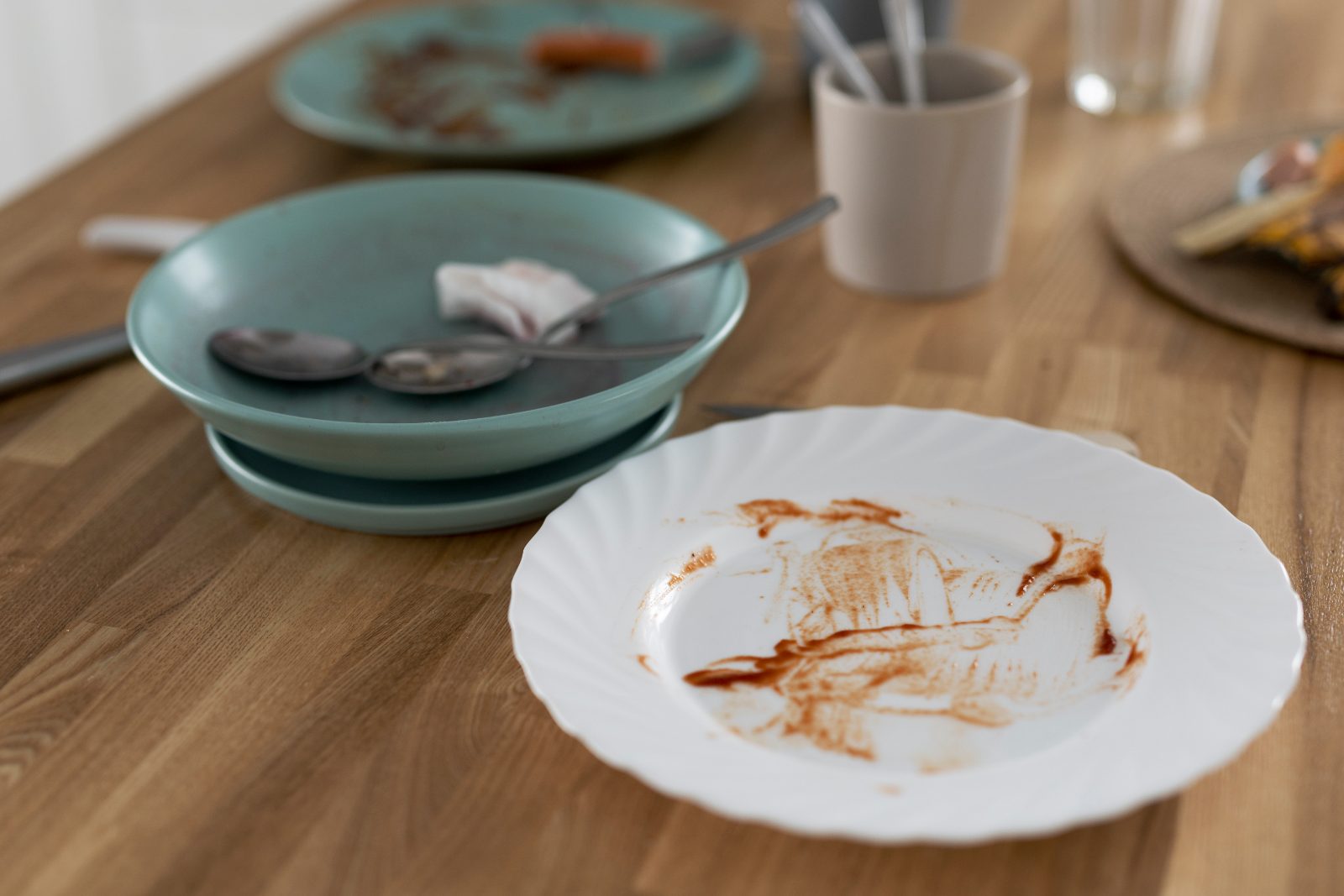
By mid-afternoon the table has changed jobs. School bags land on it, worksheets spread across it, and craft projects leave behind that particular combination of dried glue, marker ink and pencil shavings which no amount of optimistic wiping will shift.
Dried glue comes off with patience rather than force. A damp cloth left sitting on the spot for a minute softens it enough to lift cleanly. Going at it with a fingernail or the edge of a knife is how a tabletop picks up the scratches it then keeps for years.
Dinner is the heaviest shift of the day, and the chairs finally get their turn. Fabric seats catch what the tabletop misses: splashes, crumbs pushed off the edge, and the slow build-up of body oils where forearms rest and backs lean.
Fabric holds on to all of it. Unlike a wooden top, a woven seat pad cannot really be wiped — the mark goes in rather than sitting on the surface, which is why chairs can look perfectly fine from standing height and tell a different story when you crouch. Vacuuming the seams weekly with a brush attachment keeps crumbs from working deeper. The oils and the older marks are what a sofa and mattress cleaning visit is built for, because hot-water extraction reaches through the weave rather than across it.
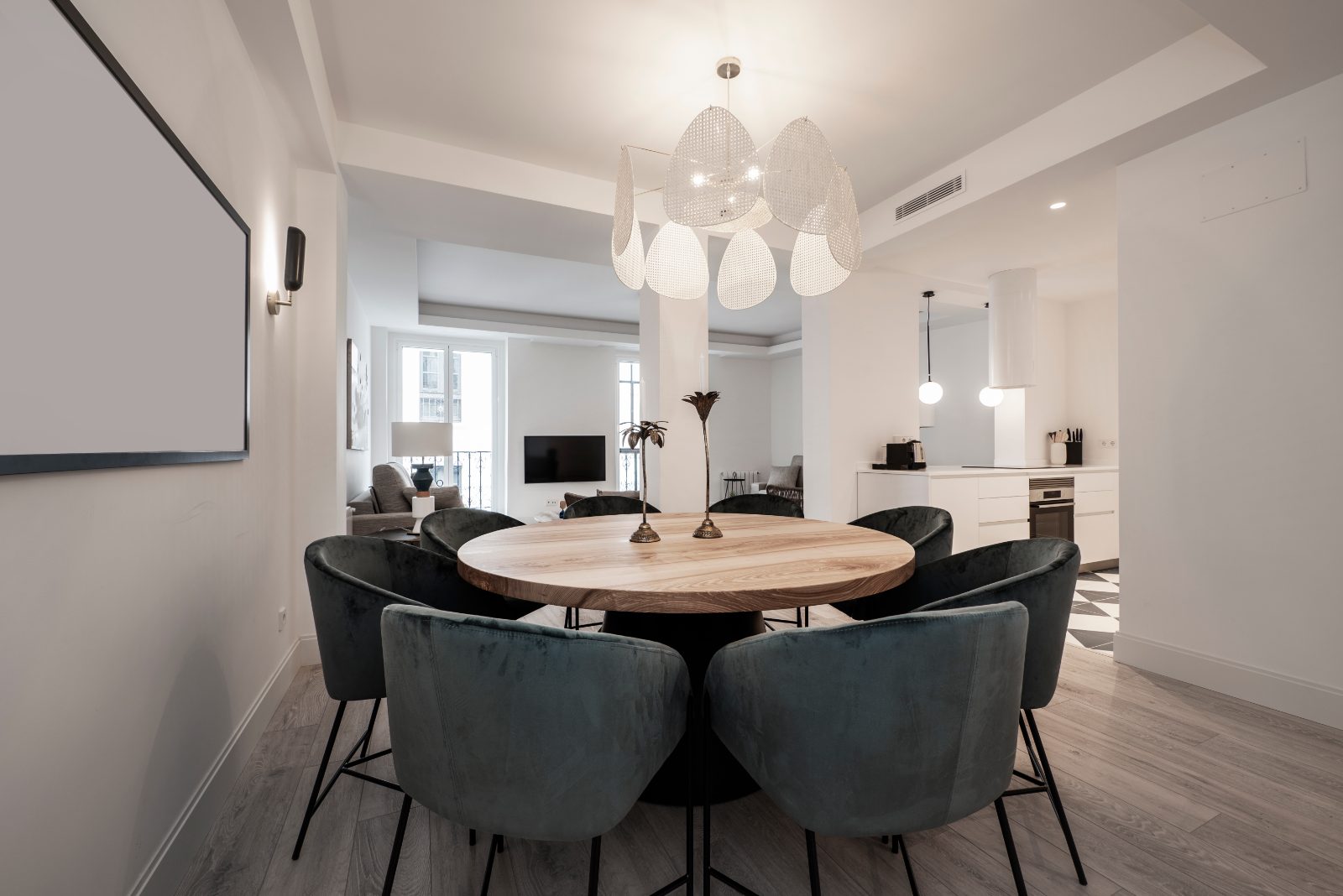
The evening wipe decides what your table looks like in a year, so it is worth doing in the right order. Five minutes, like this:
Underneath is the step most of us skip. Chair legs mean the floor beneath a dining table gets swept around rather than through, and it is where crumbs, dust and the odd grain of rice quietly collect into something a broom stops being able to fix.
Do tonight's wipe tonight — it genuinely works, and it is the single best habit for that surface. But be honest about where a cloth stops. Grease that has crept into the grain of the top, seat pads that have been absorbing dinners for two years, the floor under the table that has been swept around rather than cleaned: none of that is a five-minute job, and no amount of diligence in the evening will reach it.
That is the split worth making. The daily wipe is yours. The rest belongs to a deep clean, a floor deep clean for the ground your chairs stand on, or a regular housekeeping visit that takes the whole routine off your hands. If your table has been working four shifts a day for years without one, book your next clean and let someone else start where you cannot.


.png)


