
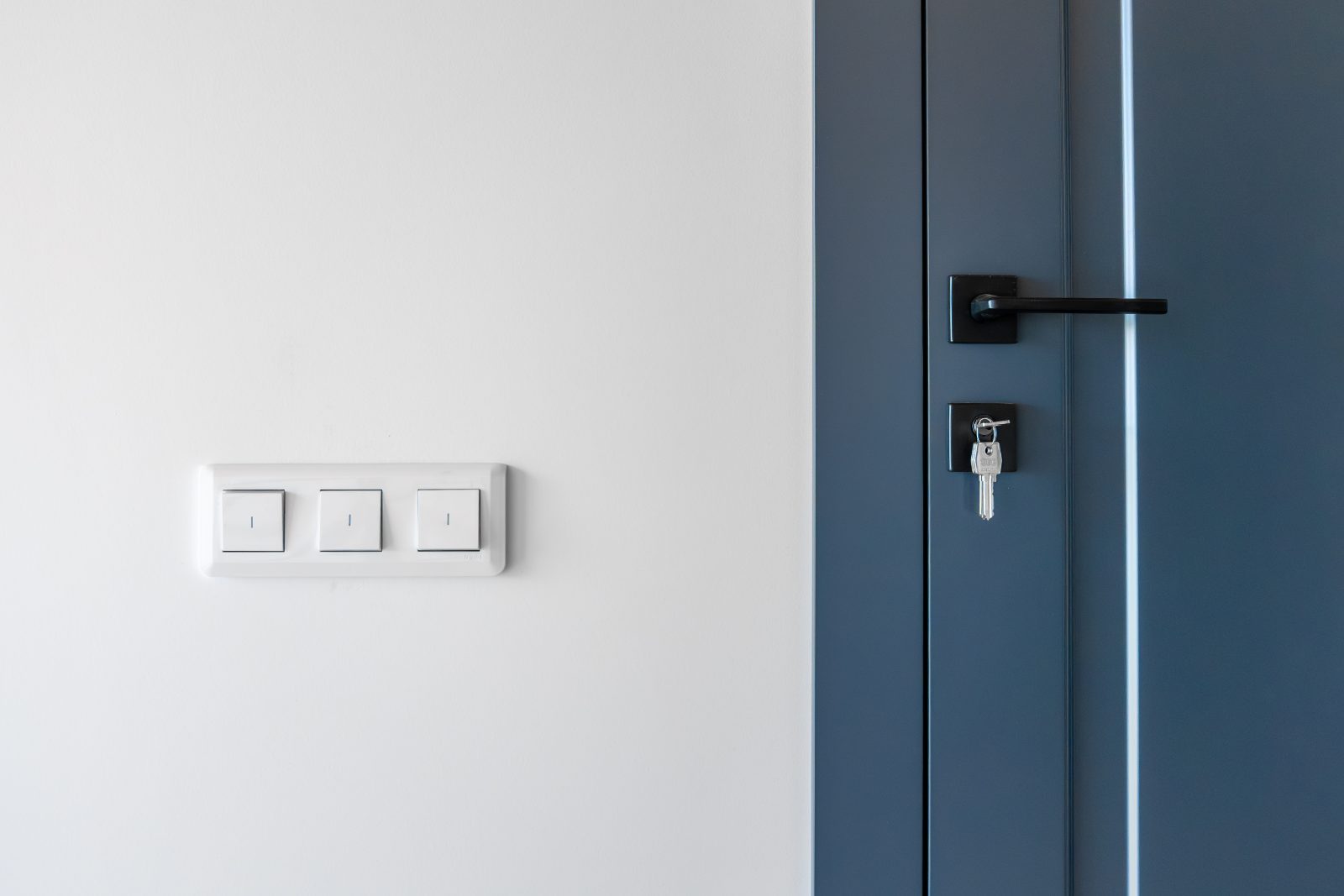
You have walked through the doors in your flat thousands of times. You have almost never looked at one.
A door is built to disappear. You register the gap, the room beyond, whether it is open or shut, and move on. The slab itself, the frame around it, the edge your fingers push against every day — all of it sits at exactly the height and angle that attention skips. And a door is not like the other surfaces in your home. Dust settles onto a shelf. A door does not collect dust so much as it collects you: hands, shoulders, hips, the corner of a laundry basket, a suitcase wheel, a child at full tilt. Almost everything on a door arrived there by contact. Which is why a door can look perfectly fine from across the room and feel faintly tacky under your palm.
The audit takes half a minute. Swing the door out to ninety degrees, then stand so that a window or a lamp rakes across its face rather than lighting it head on.
At that angle it stops being a flat white rectangle. A wide, soft smudge appears around the handle, the shape of several thousand hands. There are flick marks low down where a mop has been swung past. And across the whole face there is a dullness — a thin film of skin oil, cooking vapour and airborne dust that our humidity keeps faintly tacky instead of letting it dry and fall away. It is the same film that makes kitchen cabinet doors feel sticky rather than dusty, and a dry cloth only moves it around.
Warm water, a drop of washing-up liquid and a well wrung-out microfibre cloth will lift most of it. Wring it out properly. Most internal doors are hollow-core with a painted or laminate skin, and standing water is the one thing they genuinely cannot cope with.
Shift your eyes about ten centimetres outward, onto the architrave. The frame takes the punishment the door avoids. Knuckles at handle height, the vacuum at ankle height, furniture on the way in, shopping bags on the way out — the edges and corners of a door frame carry more scuffs per square centimetre than any other painted surface in the flat.
Check the strike plate while you are there, the small metal plate the latch drops into. It is a recess nobody has ever cleaned, and it collects grey fluff with real enthusiasm. A cotton bud sorts it in seconds.
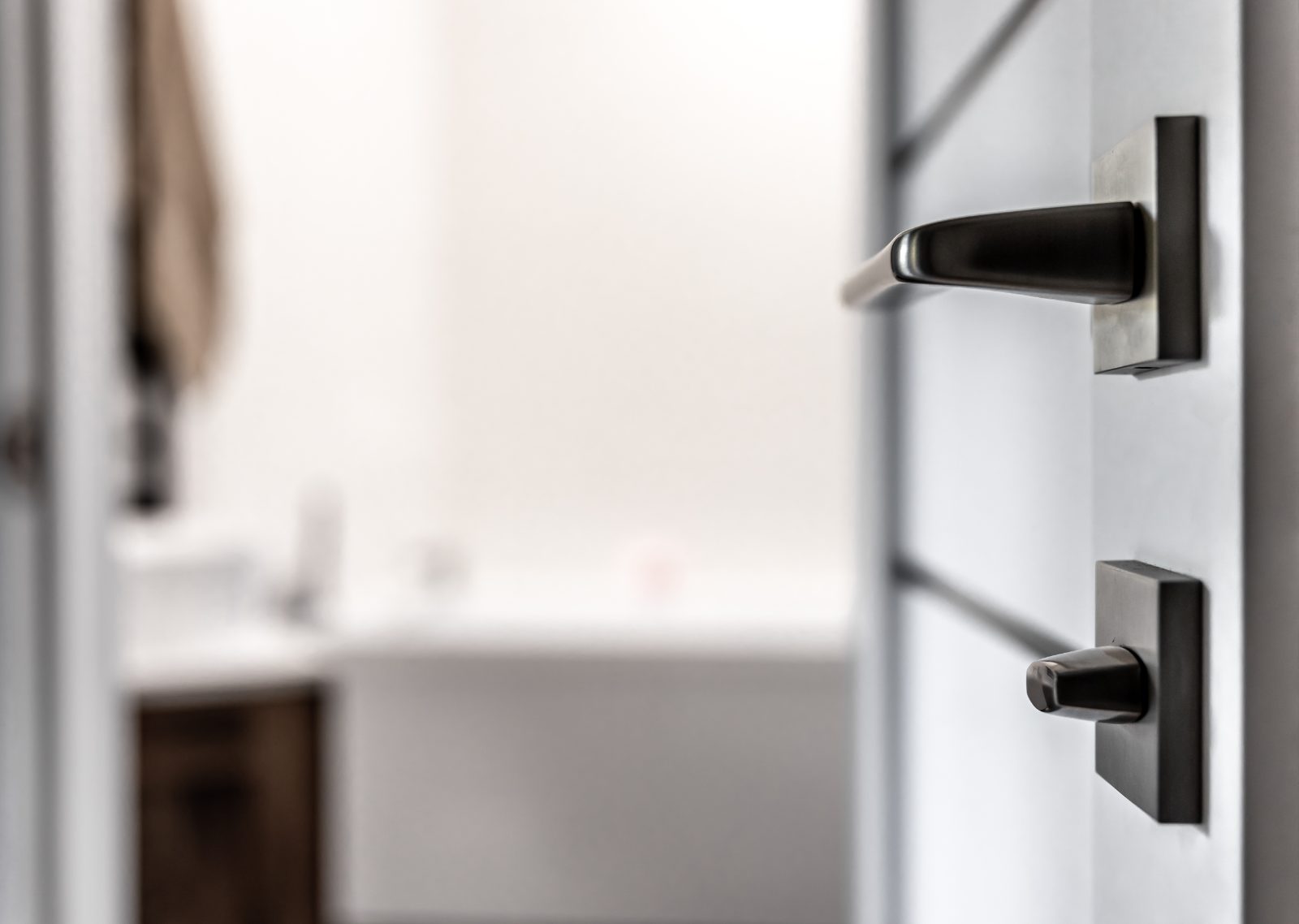
This is the one door in a Singapore flat that is fighting a losing battle, and the damage always starts at the bottom. Steam rolls out every time somebody showers. Mop water wicks up into the end grain. Wet feet finish the job. Look at the lowest ten centimetres of the leaf on the bathroom side, and run a finger along the very bottom edge.
If the laminate has lifted at a corner, or the edge feels soft, or a dark line is creeping up from the floor, that is not dirt and it will not wipe off. Moisture has already got inside, and what grows in it is mould. Spotting on the surface of a frame can be treated. Once it is inside a swollen hollow-core door, the door itself is a job for someone qualified to take it apart. If it has spread onto the frame or the wall around it, mould removal is the sensible call rather than another wipe.
Push the door flat back against the wall. You are now looking at the half of it that has never been cleaned, because it is only visible for the two seconds a week the door is fully open.
Run a finger along that top edge before you take any of this on faith. It is the most reliable party trick in home cleaning, and nobody has ever been pleased with the result.
You do not need a plan for this. Pick the door you use most — almost certainly the bathroom or the main bedroom — and give it twenty minutes with a damp cloth: face, frame, both edges, the top, the hinges. The difference is obvious enough that you will start the next one unprompted.
Where it stops being a cloth job is when the film has been quietly building for years, when the frames and the gaps beneath need doing properly, or when you would rather not spend a weekend on it. That is where a deep clean earns its keep, and where a regular housekeeping visit stops the doors drifting quietly back to where they started. When you would rather hand the whole lap over, book your next clean and let someone else find the top edge.


