
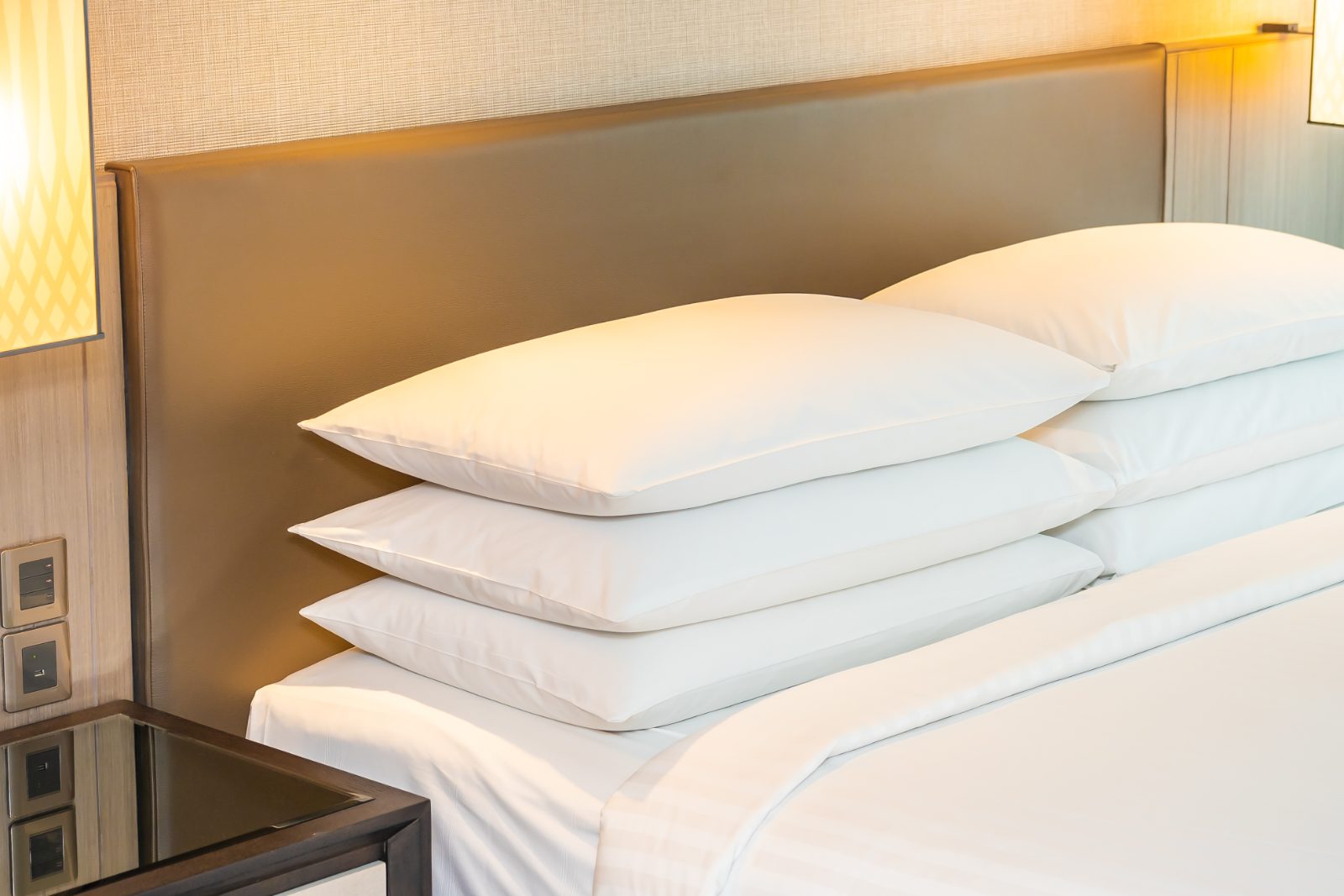
You are in contact with your pillow more than with any other object you own. Roughly eight hours a night, face pressed into it, for years at a stretch. And in most flats it is also the one thing in the bedroom that has never once been through a wash.
That is not negligence. It is a quiet substitution: the pillowcase goes in with the sheets every week, and somewhere along the way the case started counting as the pillow. Closing that gap takes about five minutes, and you can start tonight.
Do it now, if the bed is within reach. Strip the case, strip the protector if there is one, and hold the bare pillow up to the light. Three things will tell you most of what you need to know.

We sweat through the night here in a way a temperate bedroom never asks for, and the air gives that moisture nowhere to go. With humidity sitting between 70 and 90 per cent for most of the year, what leaves your body overnight does not simply evaporate out of the filling by morning.
The aircon does not rescue you either. Run it, and the room cools while the moisture already inside the pillow condenses rather than leaves. Leave it off, and the pillow stays warm and damp until you lie back down on it. Either way you end up with the warmest, dampest, most reliably fed object in the room, which is exactly the combination dust mites thrive in, and exactly the one that lets mould get a foothold in a bedroom that already smells faintly musty by the end of a rainy week.
Most people stop here because they are not sure the thing is washable at all. More often than not, it is.
Polyester and hollowfibre pillows, and most down and feather ones, go into the machine on a warm wash. Two at a time keeps the drum balanced, a mild detergent is plenty, and an extra rinse clears the suds out of the filling. The drying is the real work and the part worth being stubborn about: a pillow that goes back on the bed even slightly damp will smell worse within a week than it did before you started.
Memory foam and latex are the exception. Water breaks their structure down, so they never go in the machine. Vacuum the surface, spot-clean marks with a barely damp cloth, and give them a long airing somewhere shaded with air moving through it. A breezy corridor beats direct sun, which yellows foam.
Whatever the filling, this is the argument for a proper protector rather than a second case. A good one:

Here is the part a wash does not reach. Everything that soaked through the case and into the pillow has also been working its way downward, night after night, into the mattress beneath it. The pillow you can carry to the washing machine. The mattress you cannot.
That is the honest limit of a Saturday morning. You can wash what is washable and air what is not, but moisture and residue that have settled into the layers of a mattress need proper extraction and controlled drying to come out, which is what sofa and mattress cleaning is built around. If the damp has travelled further than the bed, with grey speckling on the back of the wardrobe or a dark bloom in the corner behind the headboard, mould removal belongs in the same conversation, because a treated mattress in an untreated room is a short-lived win.
Tonight's job is the smaller one, and it is worth doing before you sleep on it again: take the case off and look at what is underneath. Most people never have, not once. If what you find argues for handing the bedroom over along with the rest of the flat, housekeeping covers it, and you can book your next clean in a couple of minutes.


