
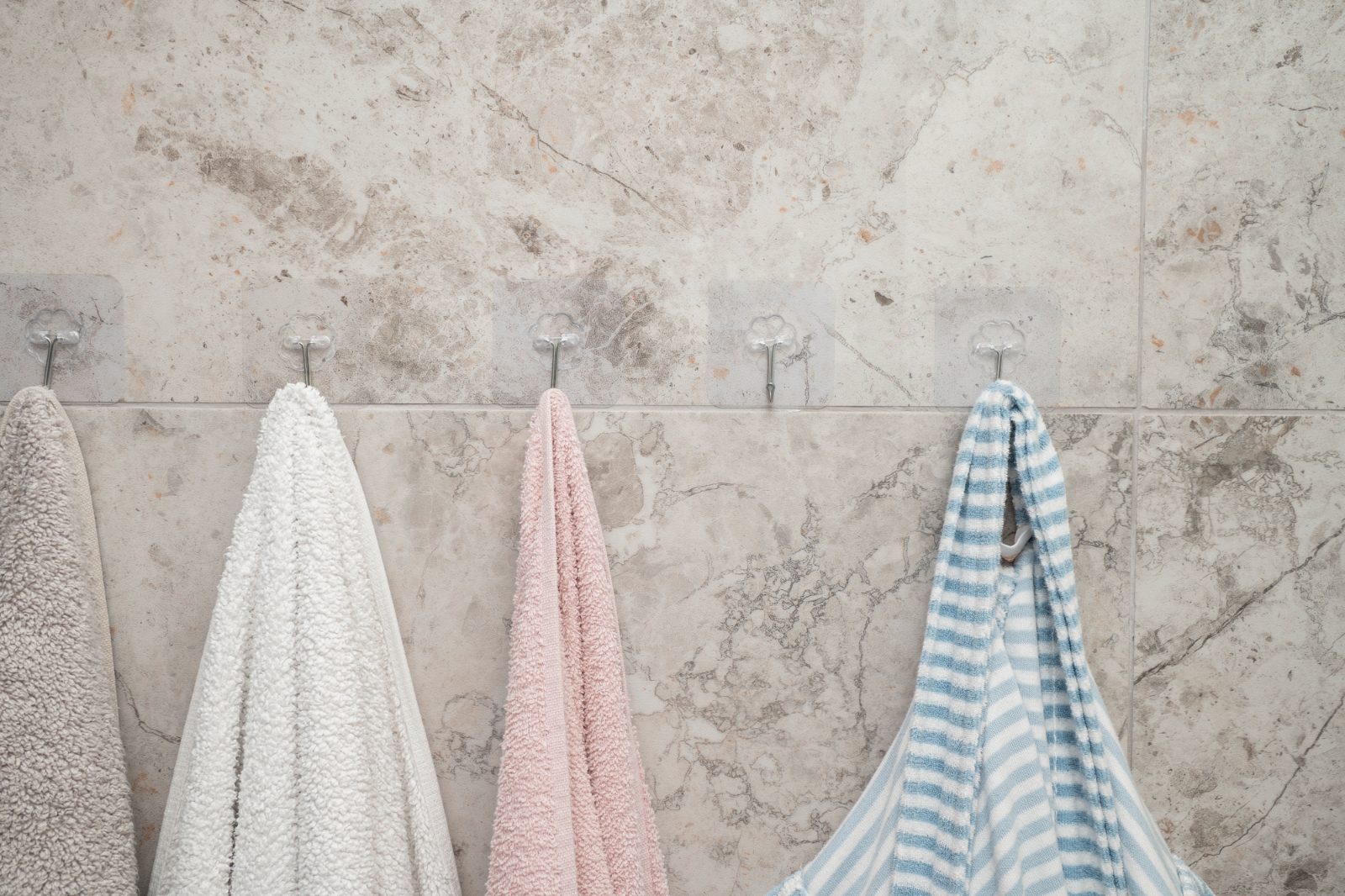
You wash the towels on Sunday. They come out of the machine smelling of nothing in particular, which is exactly right, and you hang them up. By Tuesday, still fine. By Thursday you bring one up to your face and there it is — that faintly sour, slightly damp note that no amount of deciding it's fine will shift.
The instinct is to blame the wash — more detergent, a hotter cycle, a different brand. It almost never works, because the towel was clean when you hung it up. Whatever happened to it happened afterwards, on the rail.
That sour smell isn't dirt you failed to remove. It's what grows in a textile that stays damp long enough. Your skin leaves oils and dead cells in the fibres every time you dry yourself, and those are food. Warmth and moisture are the conditions, and Singapore supplies both for free, all year.
Adding more detergent usually makes it worse. Past a certain dose the machine can't rinse it all away, and what stays in the fibres holds moisture and gives the whole business something to sit in. Fabric softener is the same trap in nicer packaging: it works by coating the fibres with a thin film, which is why a heavily softened towel feels wonderful and absorbs like a raincoat. A towel that absorbs badly stays wet longer, and a towel that stays wet longer is the towel that smells by Thursday.
The honest version is unglamorous. A towel washed perfectly and dried badly will turn. A towel washed with far less fuss and dried properly usually won't. Almost everything that follows is about drying.
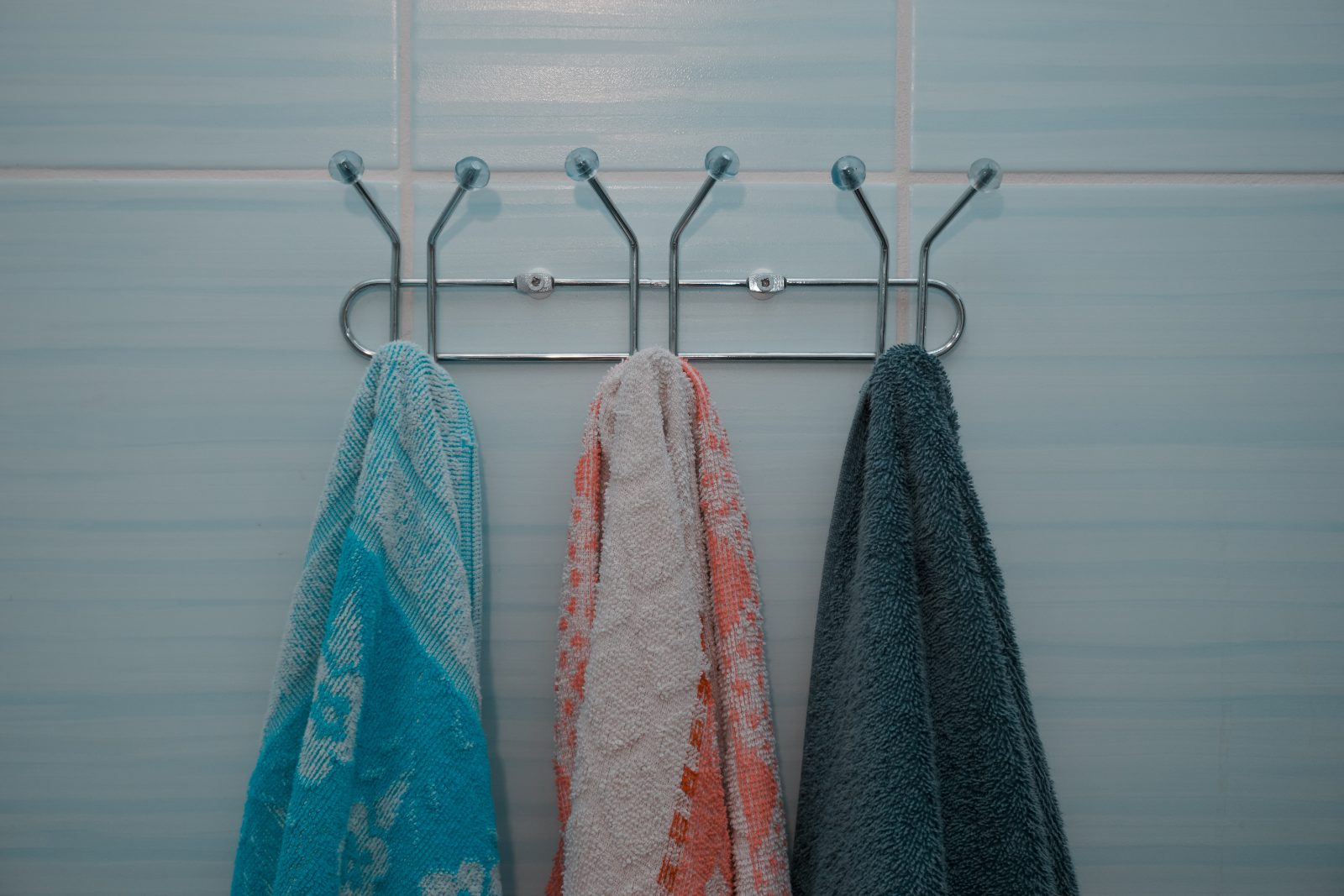
Consider what you are asking of a bathroom. Plenty of flats have one with no window at all, or a single louvred panel onto a corridor, and ambient humidity sits high most of the year. A ten-minute hot shower puts a remarkable quantity of water vapour into a small tiled box, and the extractor fan, where there is one, tends to run while you're in there and stop the moment you leave. Into that room goes a soaking towel, expected to dry.
Geometry matters more than people expect. A towel folded in half over a rail has roughly a third of its surface exposed to air; the rest is pressed against itself. Spread the same towel along the full length of the rail and nearly all of it is exposed. Nothing else has changed, and it will dry in a fraction of the time. Hooks are worse again — a towel on a hook is a thick vertical bundle touching itself the whole way down, and two towels on neighbouring hooks touching each other is about the worst arrangement in the flat.
The cheapest fix is leaving the bathroom door open afterwards and running the fan longer than feels necessary. It's also worth noticing that the still, damp conditions that sour a towel are precisely the conditions mould wants. If the grout and the silicone seals are darkening at the same time your towels are turning, those are two symptoms of one problem — and once it has taken hold in the seals, mould removal is a different job from laundry.
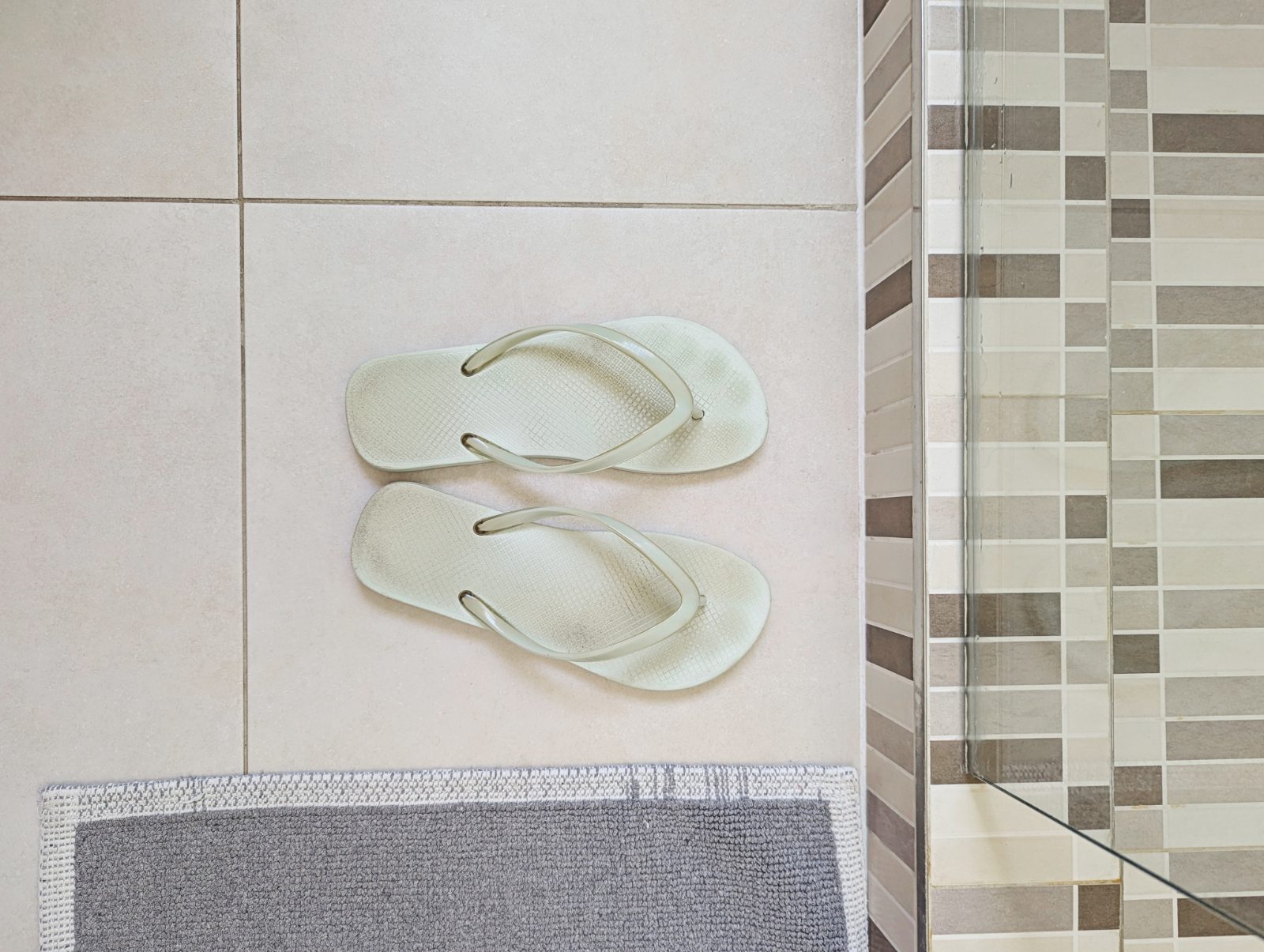
If the towel is a difficult case, the bath mat is a hopeless one. It is a thick, absorbent textile that lies flat on a floor that is already wet, gets stood on by wet feet, and is almost never hung anywhere. Both faces stay damp — the top from use, the underside because it's in contact with tile that hasn't dried either. It is the most reliably wet object in the home and the one nobody thinks to move.
The same logic catches the cloth by the kitchen sink: wrung out, folded over the tap arm, still faintly damp when you pick it up the next morning. In neither case has anything gone wrong with the washing. What has gone wrong is that a wet thing was put somewhere it couldn't dry.
None of the remedies are dramatic, which is probably why so few homes bother:
Do that much and most towels behave themselves. What it won't fix is the point at which the smell has stopped living in the textiles and moved into the room itself — into grout, into the silicone around the shower tray, into the underside of the vanity where nobody looks. That is when a deep clean or floor deep cleaning earns its place, and why regular housekeeping stops a bathroom getting there. If yours has reached that stage, you can book your next clean and hand the tiled parts over.


.png)


