
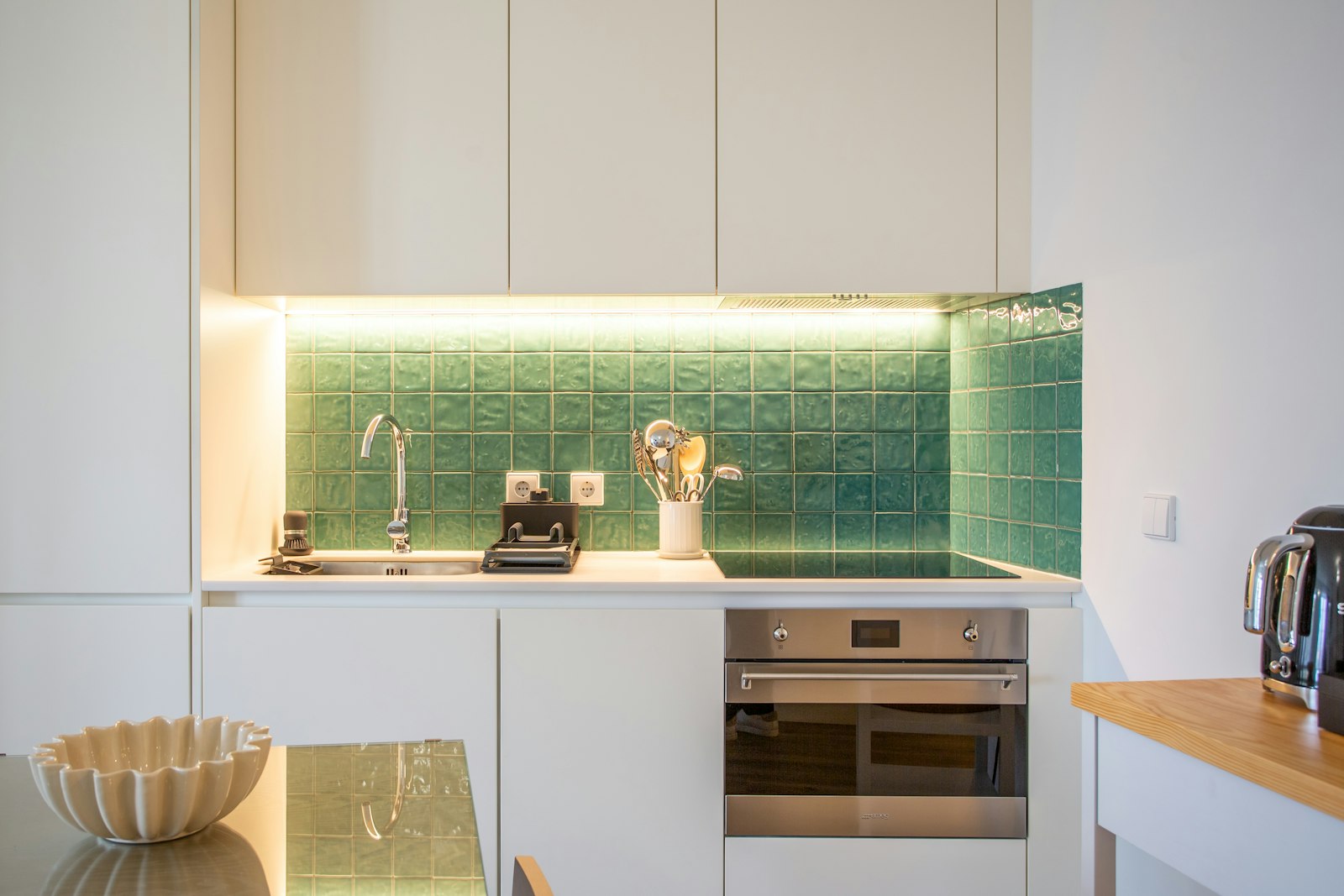
Stand in your kitchen doorway for a second and look at it properly. It isn't one room. It's two rooms sharing a floor, doing completely different jobs, getting on about as well as flatmates on opposite shifts.
Some flats make the split obvious — a glass door, a wet kitchen behind it for the serious cooking, a dry counter on the near side for the kettle. Plenty of homes have no door at all, just one galley run along a wall. It changes nothing. Both zones still exist, they still fail in completely different ways, and cleaning them the same way is why one of them never quite comes clean.
The wet zone is the sink, the hob, and an arm's length of worktop either side. It's the only part of your home where you routinely heat oil until it leaves the pan. Wok cooking, deep frying, even a hard sear throws a fine mist of fat into the air, and that mist doesn't stay above the stove. It drifts, cools, and settles on the tiles, the cabinet fronts, the underside of the hood and the wall opposite.
On its own that film is nearly invisible. The problem is what it does next: it turns every surface it lands on into flypaper. Dust that would have brushed off a clean cupboard door instead sticks fast, and after a few months you're not dealing with dust or grease but a stubborn hybrid of both. That's why a wet-zone cabinet feels tacky rather than dusty, and why a dry cloth just smears it around.
What shifts it is heat and patience — warm water, a proper degreaser, a few minutes of dwell time before you wipe, and a cloth you're happy to write off. The other half of the job is damp. In our humidity, the wall behind the tap, the sealant around the sink and the grout under the hob stay wet far longer than they would anywhere cooler, which is exactly the invitation mould is waiting for. Dry that strip down at the end of the day and you remove most of the argument.

The dry zone has the opposite life. Nothing gets fried here, so nothing gets greasy — but it's the surface everything lands on. The kettle and the toaster live here, and so do coffee grounds, sugar, breadcrumbs, the mail, the shopping bags that came straight off the lift floor, and the keys that have been through three MRT stations today.
The failure mode is accumulation rather than chemistry, and it hides in the gaps: the seam where the worktop meets the wall, the few centimetres under the kettle base, the tops of the appliances nobody ever looks at from above. None of it needs a degreaser. It needs a damp microfibre cloth and the willingness to lift things up rather than wipe around them.
One rule matters more than any product, and it's the one most kitchens break: don't use the same cloth on both halves. A cloth that has just been over the hob carries a film of oil, and dragging it across a dry worktop turns that counter into a crumb magnet within a day. Two cloths, two colours, kept apart — a small change that fixes a problem most people assume is just how their kitchen is.

If your kitchen has a genuinely grubby patch, it will be the seam between the two zones, almost always at floor level. Oil mist doesn't respect the glass door. It drifts out at the threshold and settles on the dry-side floor, where it collects the grit walked in from outside. That's the sticky-underfoot feeling you get near the kitchen even after mopping.
It's made worse by the two sides often not being the same material — tile on the wet side, vinyl or timber on the dry side, and a transition strip between them that traps everything and cleans like neither. Mop the border last with a fresh bucket, and give that strip a scrub rather than a pass. Ten seconds of extra effort in the one place that actually shows.
There's a point where the wet zone simply stops responding. The grout has gone permanently grey, the sealant is spotted rather than stained, the hood filter is past the point where soaking helps. That isn't laziness — it's the ordinary result of years of cooking in a warm, humid flat, and no weekly wipe was ever going to reverse it.
That's the stage where it's worth handing over. A deep cleaning resets both halves at once and gets into the places a normal clean skips. Floor deep cleaning is the one that sorts out grout and that stubborn border strip. If the damp behind the sink has turned into something darker, mould removal is a different job from wiping it and hoping. And if the honest problem is simply that nobody has time to keep two zones in balance every week, that's what regular housekeeping services are for.
Your kitchen was never going to behave like one room, because it isn't one. Give each half what it's actually asking for and both get noticeably easier — and when the heavy end needs handing over, you can book your next clean in a couple of minutes.


.png)


