

You mop on a Saturday morning. The tiles come up gleaming, the flat smells faintly of lemon, and for about forty minutes you feel like someone who has their life properly in order. Then you pad through to the kitchen barefoot and the floor has a grip to it. Not wet. Not dirty, exactly. Just tacky, in a way you can feel but cannot see.
That is not your imagination, and it is not a sign you mopped badly. It is the honest arithmetic of what mopping actually does — which turns out to be rather less than most of us assume.
A mop head has a very short memory. It picks grime off the tile, holds it for about three seconds, and then goes straight back into the bucket. From the second dunk onwards, every pass lays down a diluted version of everything already collected. The first room genuinely gets cleaned. The last room gets rinsed in the first room's water.
Two habits fix most of that, and neither costs anything. Wring the head far harder than feels necessary, and change the water long before it looks like it needs changing. Once the bucket has gone the colour of weak tea, it has stopped being a cleaning solution and started being a distribution system.
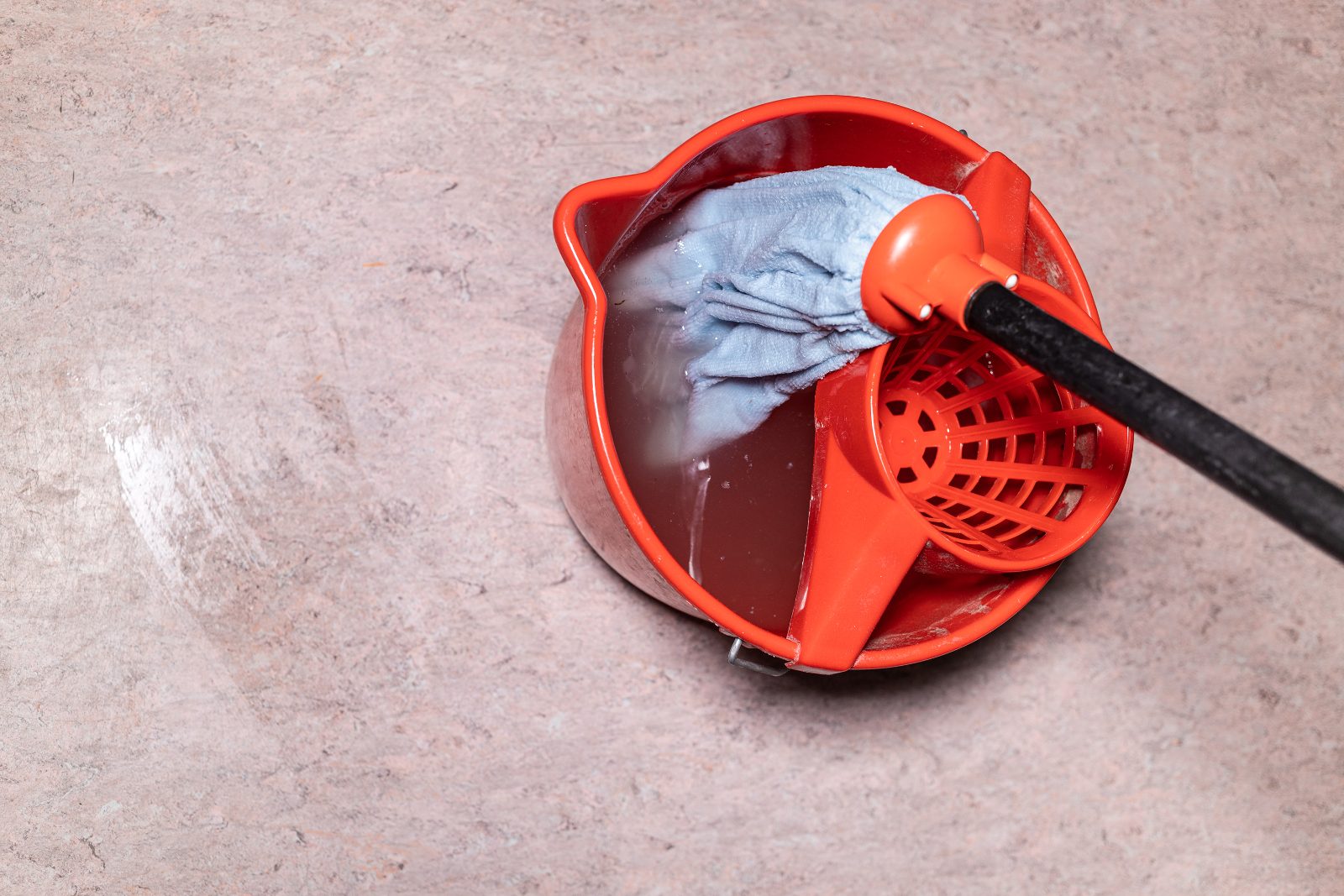
Detergent lifts dirt by holding it in suspension so the mop can carry it off. Put in more than the water can rinse away and the surplus simply stays behind as a thin film. That film is slightly tacky, which is precisely why it catches the next fortnight of dust and pins it flat against the tile. The floor goes dull, the natural response is a bigger squeeze of detergent, and the loop tightens.
The fix is unglamorous and works every time.
In our climate a floor does not really dry so much as negotiate with the air. On a still, humid afternoon with the windows shut, water lingers long enough for whatever is dissolved in it to settle back down rather than lift away. The tile ends up wearing a faint haze of minerals and detergent that no amount of further mopping will shift, because more mopping only adds more of the same.
Open the windows, or set a fan at floor level and point it down the length of the room. Ten minutes of moving air after the last pass does more for the finish than another twenty minutes of work.
Grout lines sit a millimetre or two below the face of the tile, and a flat mop bridges straight over them. That little channel is also where the dirty water ran while you worked, so it quietly collects the very thing you were trying to remove. Textured, matte and anti-slip tiles do the same at a smaller scale: the mop rides the high points and the low points keep their share.
This is why a floor can be honestly clean to the touch and still read grey from the doorway. The tiles are fine. It is the lines between them doing the talking.
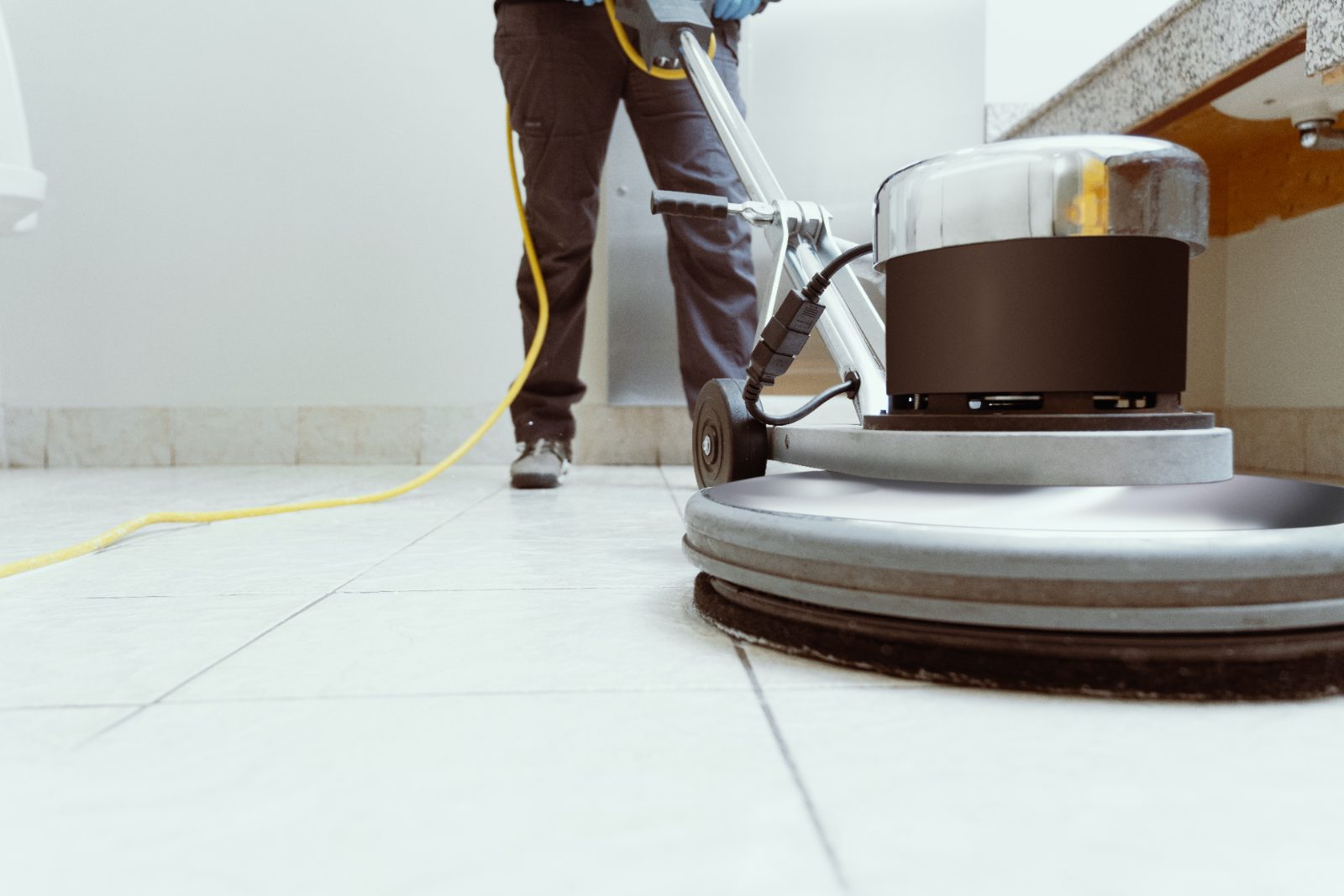
There is a point past which household kit simply runs out of road. Ground-in film across a whole flat, grout several shades darker than it started, or the dull patches that show up after a few years of foot traffic usually need mechanical agitation and proper extraction — a weighted pad working the surface, and the dirty solution pulled off rather than pushed around. That is what a floor deep clean is built for, and it was never a job a bucket was going to finish.
Either side of that, a regular housekeeping visit stops the weekly film from establishing itself in the first place, and a deep clean picks up the skirting, corners and thresholds a routine mop-round never quite reaches.
So: change the water tonight, halve the detergent, and put a fan on the floor while it dries. Then stand in the doorway and look along the grout lines. If they are telling a different story from the tiles, that is the part worth handing over — you can book your next clean in a couple of minutes.


.png)


