
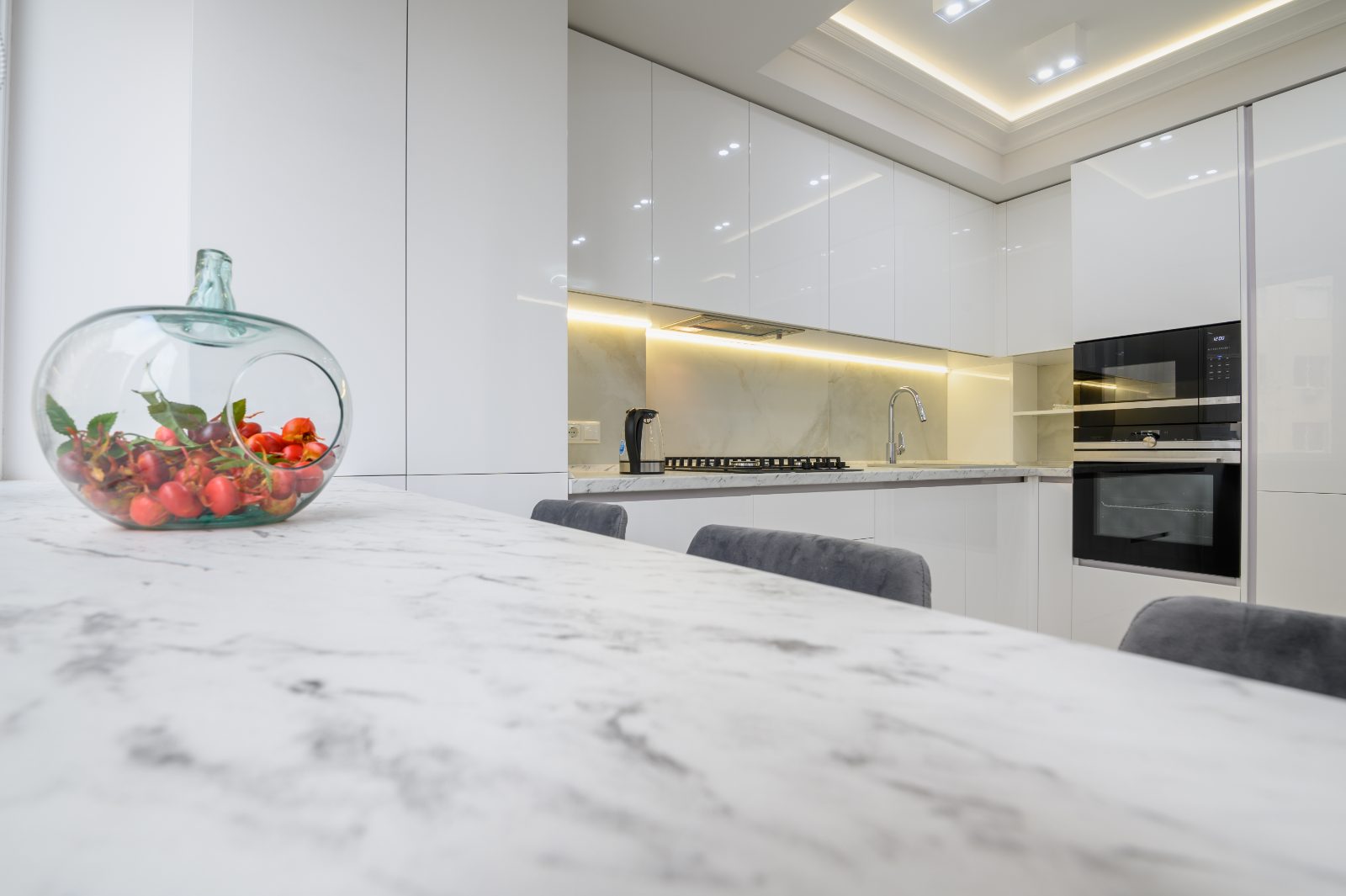
There is a particular kind of annoyance that arrives about a week after the damage does. A pale ring near the kettle. A dull patch beside the hob that catches the light differently. A shadow at the edge of the basin that no longer wipes away.
None were there in July, and you cannot say when they arrived. The honest answer is fast — far faster than the week it took to notice. Most worktop damage in a Singapore flat happens in a minute or two, while you are in the next room.
Whatever your counter is made of — engineered quartz, granite, marble, laminate, timber, or the compact stone that is standard in newer condos — what you actually touch is not the material. It is a finish: a polish, a seal, a melamine layer, an oil or a lacquer, a fraction of a millimetre thick.
That finish is the entire defence. Underneath it, most surfaces are mildly porous and a few are chemically reactive. When something spills, the clock that matters is not how long until you wipe it but how long until it gets past the finish — and on a counter that is a few years old and scratched around the sink, that can be quick indeed.
Damage control on a worktop is mostly speed and very little product. Lift whatever spilled. Blot rather than wipe, because wiping drags the spill wider and presses it into every scratch on the way. Then rinse the patch with plain warm water and dry it properly.
Drying is the step everyone skips, and in our humidity it matters most. A surface left to air-dry stays damp far longer than you would think, and whatever was dissolved in that water is left behind. Those ninety seconds are often the whole difference between a non-event and a mark you will still be looking at next year.
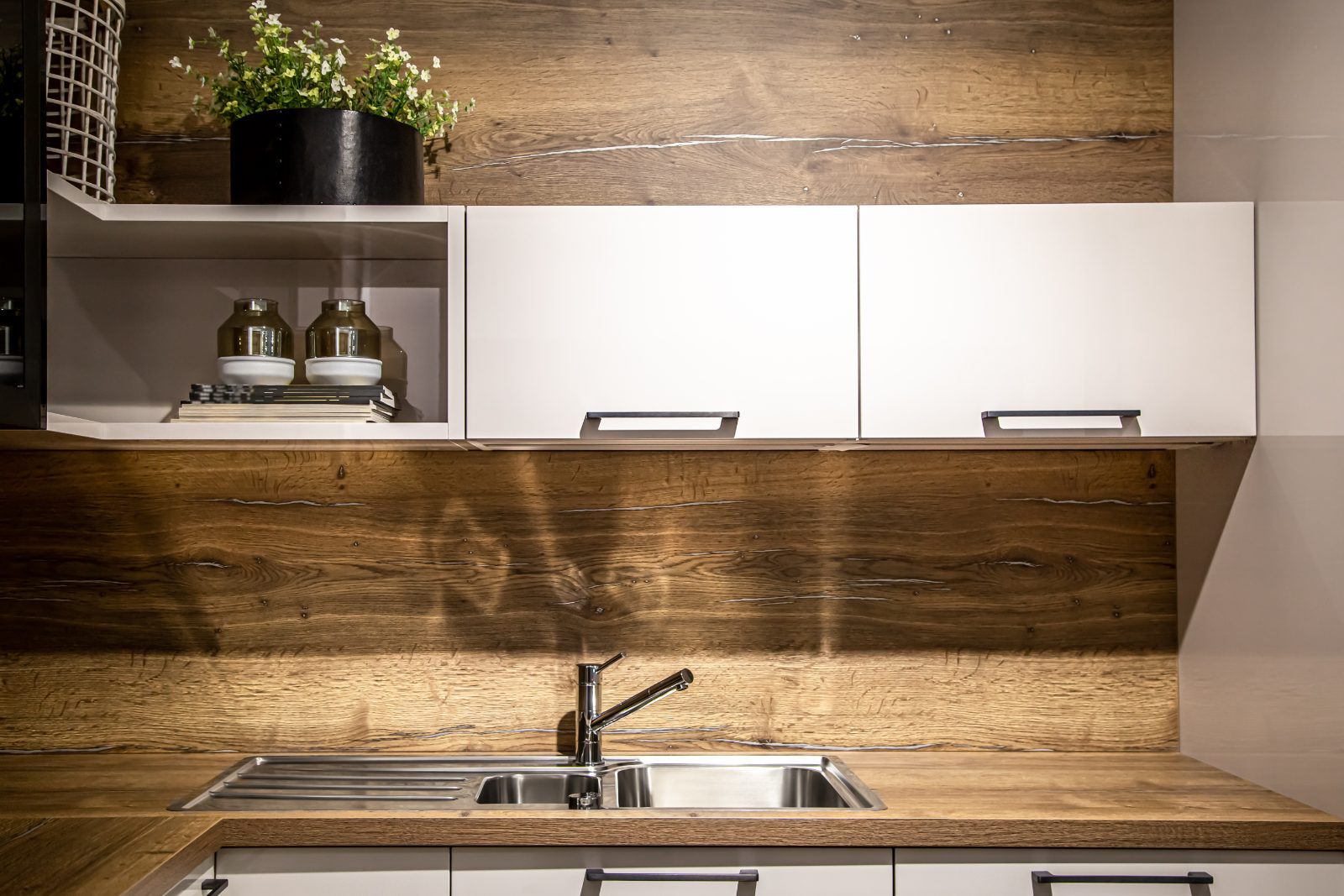
Ask most people what ruins a counter and they will say a hot pan. The quieter culprit is acid, and a Singapore kitchen is full of it: calamansi, lime, the vinegar in a jar of achar, tamarind, tomato, and the ring left by a half-drunk glass of orange juice.
On marble and other calcareous stone, acid does not stain so much as etch. It eats a shallow dull spot into the polish, which is why the mark survives every spray you throw at it: there is nothing left on the surface to clean off. The shine itself has gone. The same warning applies to the descalers and limescale removers sold for bathroom taps: acidic by design, and they should never meet a stone top.
The other four each do their damage differently, with one reaction worth remembering:
Not one of these calls for a special product. They call for noticing, within the minute.
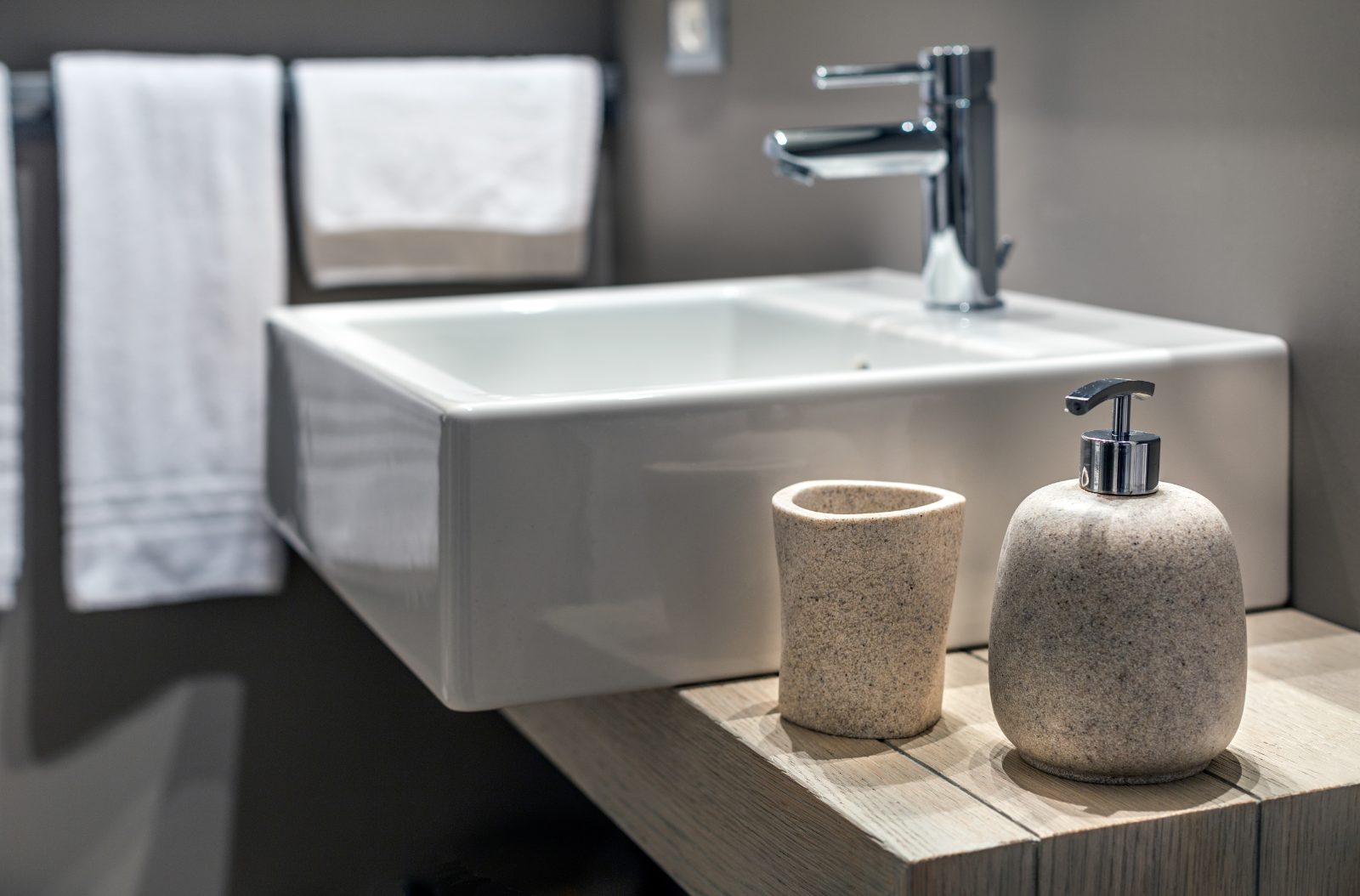
Everything above applies in the bathroom, with the difficulty raised. A vanity top gets wet several times a day and is almost never dried. It carries a row of bottles that leave their own rings. Toothpaste is mildly abrasive, several mouthwashes are acidic, and the join where the counter meets the basin stays damp long enough for mould to settle into the sealant and stay.
There is an honest limit to all this. Once stone has etched, timber has gone dark beneath its finish or laminate has lifted along a seam, you are looking at a refinishing job rather than a cleaning one, and worth having a qualified tradesperson look at.
Plenty sits short of that line and still will not shift with a kitchen spray: the oil film across a whole run of counter, the grey grout behind the hob, the mould worked into the silicone at the back of the vanity. That is a question of time and method rather than another bottle, which is why a deep cleaning session reaches what a weeknight wipe never will, and why a regular housekeeping round keeps it from building back. Where mould has gone past the surface of a seal, mould removal is the proper tool.
So do both. Deal with what is in front of you tonight — blot, rinse, dry — and hand over what has already set in. If your counters have been quietly collecting marks for a couple of years, you can book your next clean and have them seen to properly.


