
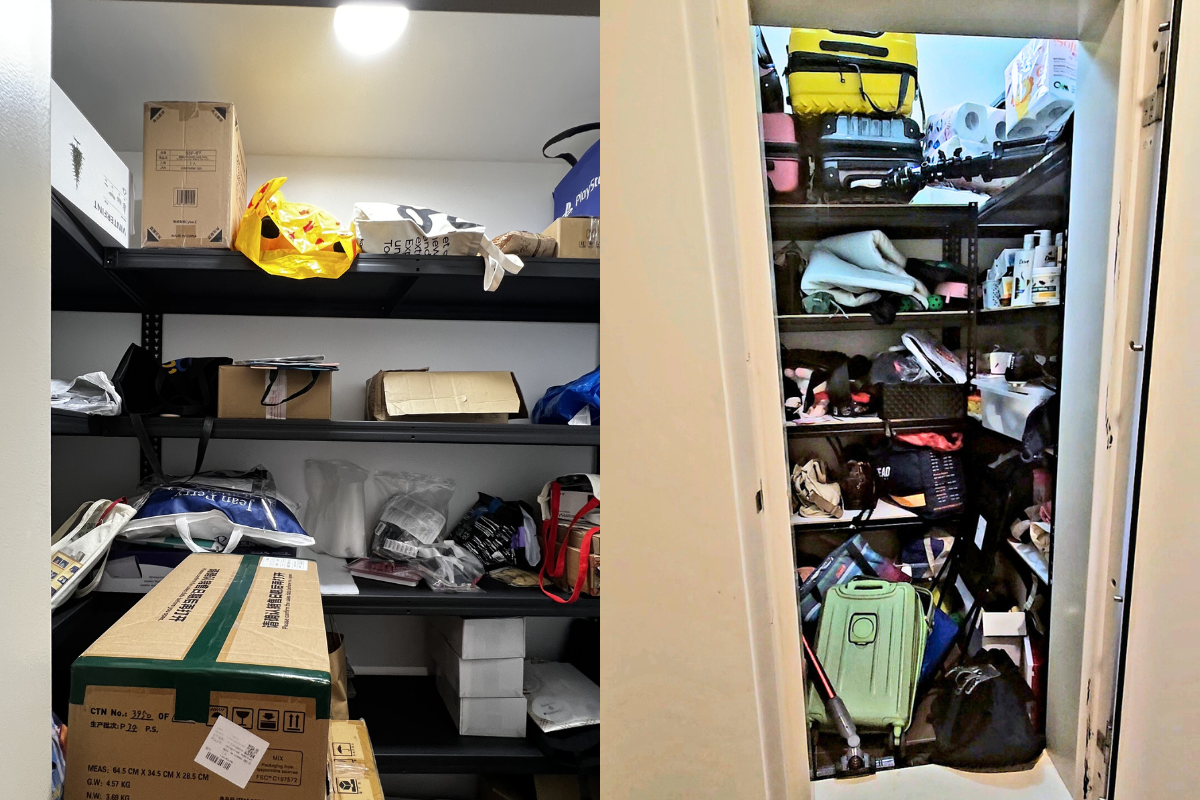
Let's be real (or if you’re Gen Z - “BFFR/FRFR”): when was the last time you opened your storeroom without immediately feeling.. ugh?
Your wardrobe? That's in your face every morning. But the storeroom is different. The door stays closed. You walk past it, you pretend it's fine. Or my favourite way to tidy up when I was having guests over in the past - frantically shove everything in the storeroom, close the storeroom door, dust my hands off and go about my day. Out of sight, out of mind, right? But is it really out of mind though?
That messy storeroom is like having an item on your mental to-do list that doesn’t get ticked off. Psychologists call this the Zeigarnik Effect, basically, your brain keeps a running tab of unfinished business. And each one of those open loops are quietly draining your mental battery.
In tiny Singapore homes where every square metre counts, a chaotic storeroom isn't just wasting space. I learned this lesson during my workplace experience in tech. We were discussing office layout, and someone suggested getting a foosball table. Sounds fun, right? Until someone did the math: "Do we really want to pay $X,XXX per month in rental for a foosball table to gather dust?" Suddenly it wasn't about "nice to have." It was about: is this worth actual money every single month?
Your storeroom is the same. Every box of maybe-someday items, every broken thing you might fix, that's prime real estate you're paying for. In Singapore, where space costs a fortune, your clutter has a literal price tag.
Storerooms are where procrastination lives. That box from when you moved in three years ago? The childhood stuff you promised yourself you'd sort through? The broken fan you might fix one day?
Each item is a decision you didn't want to make.
“But what does that even mean?” you might ask. Here’s the thing: by stuffing things into the storeroom, you’re not just avoiding clutter, you’re practising avoidance as a life skill. And the more you do it, the better you get at it. (Unfortunately).
“Come on, it’s not that serious. It’s JUST a storeroom.”
Except.. It kind of is. Avoidance doesn’t stay put. When we let one space become a mess, it subconsciously tells our brain that disorder is acceptable. It’s like the “Broken Windows Theory”, where one neglected area can gradually lower your standards everywhere else.The way you handle your storeroom can actually bleed into how you handle uncomfortable conversations, overdue tasks or difficult decisions in other parts of your life.
Think about your storeroom right now. What happens in your body?
Does your chest get a bit tight? Do you suddenly feel like scrolling social media?
That reaction is your nervous system going "Nope, we're not dealing with that today."
This is the hidden cost. Your cluttered storeroom is actively stressing you out, even when the door is closed.
Good news: sorting out your storeroom does double duty. You’re creating physical space AND proving to yourself that you can face what you’ve been avoiding. Think of it as a workout for your follow-through muscles.
Decide What It's Actually For: Before you even open that door, answer this: what is this room for? Not "miscellaneous everything” because that's how you got here. Seasonal items? Tools? CNY decorations? Your pick.
Think back to that foosball table conversation. We didn't ask "is foosball fun?" (because duh, it is very fun), we asked "is it worth the rent?" Apply the same logic here. Is storing your ex's old textbooks or that broken printer worth paying Singapore rental prices for? When you frame it like that, suddenly it's easier to say no to stuff that doesn't belong.
.png)
When you finally tackle that storeroom, something shifts. You're showing yourself you can do the thing(s) you've been avoiding.
The best part is that you've just swapped procrastination practice for completion practice. Your brain learns that facing the avoided thing is way less painful than the dread of avoiding it. That lesson alone is worth more than any amount of extra storage.
If opening that storeroom door still feels like too much, that's okay. Avoidance is your brain's way of protecting you from discomfort. However, sometimes the kindest thing you can do for yourself is face it anyway, with help.
FR talk: sometimes avoidance looks like endless YouTube tutorials and Pinterest boards while the storeroom stays untouched. Action looks like actually bringing in someone who can work through it with you.
Professional organisers don’t take over and declutter while you hide. We work alongside you, helping you build the decision-making systems and habits that turn "I'll deal with it later" into "done."
Unlike what Charlie Rich sang, “no one knows what goes on behind closed doors” - well, now you know. Your brain has been keeping tabs the whole time. The difference is, now you have the tools to finally close that loop!
For expert guidance on home organisation and practical support, you can explore our services here: Nimbus Home Organising Services
**Melissa is a therapist-in-training currently completing her Postgraduate Diploma in Psychotherapy and Counselling at The School of Positive Psychology, Singapore. This article draws on her studies in mental well-being, about how our spaces mirror our psychology and how getting organised can build emotional resilience.


.png)


